San Luis Potosí, Mexico — Nationwide coverage
Business cybersecurity, NOC, SOC and continuity
Cybersecurity and infrastructure

Cybersecurity, NOC, SOC and continuity for businesses and critical infrastructure

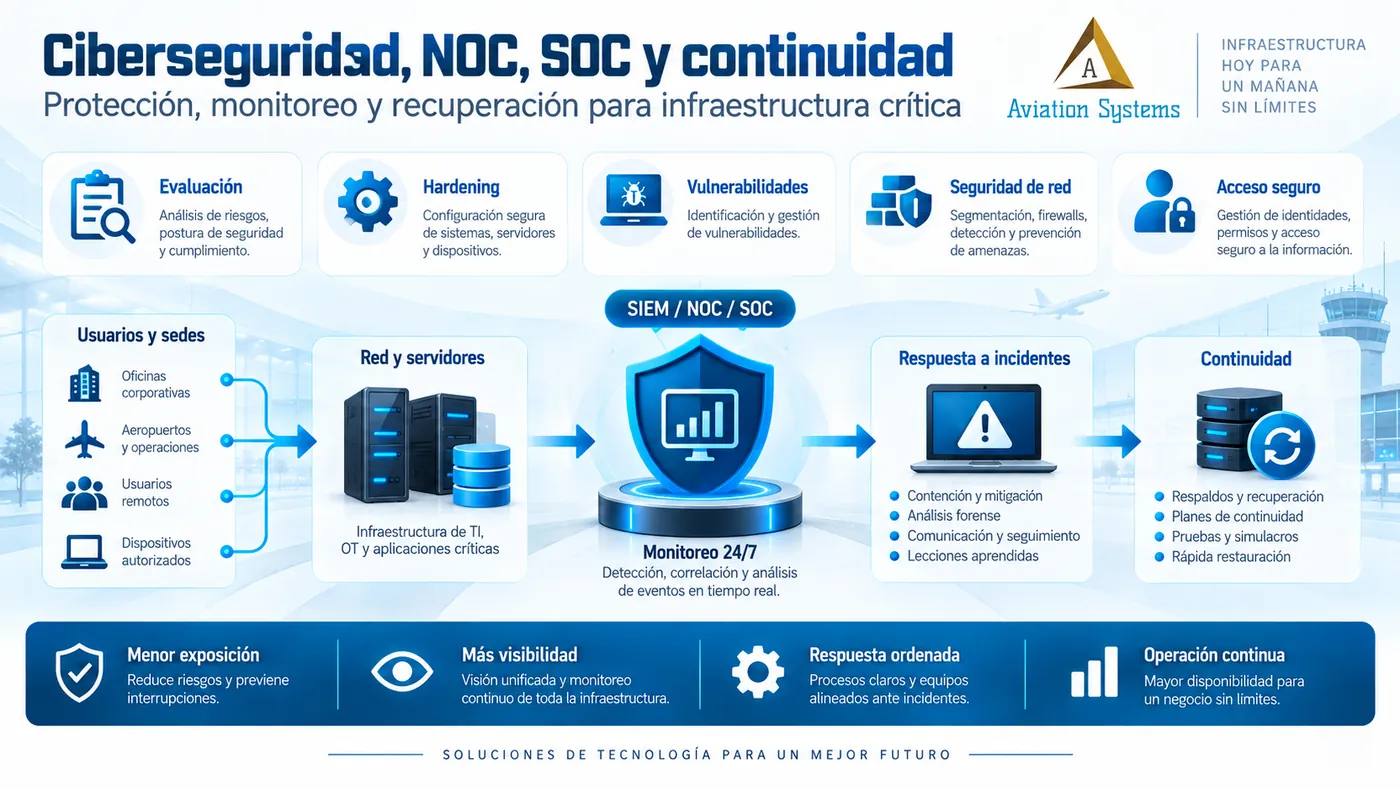
We assess, strengthen and monitor technology infrastructure to reduce exposure, improve visibility and respond in a more orderly way to failures and incidents. We integrate hardening, vulnerabilities, network security, secure access, SIEM, NOC, SOC readiness, response and recovery within a documented architecture.

HardeningVulnerabilitiesVPN and Zero TrustSIEM, NOC and SOCResponse and continuity

Security is built in layers, not with a single tool

A useful strategy starts by understanding assets, identities, services, dependencies and risks. From that context we define technical and operational controls to prevent, detect, respond and recover, avoiding tools without a clear purpose.

Service 01

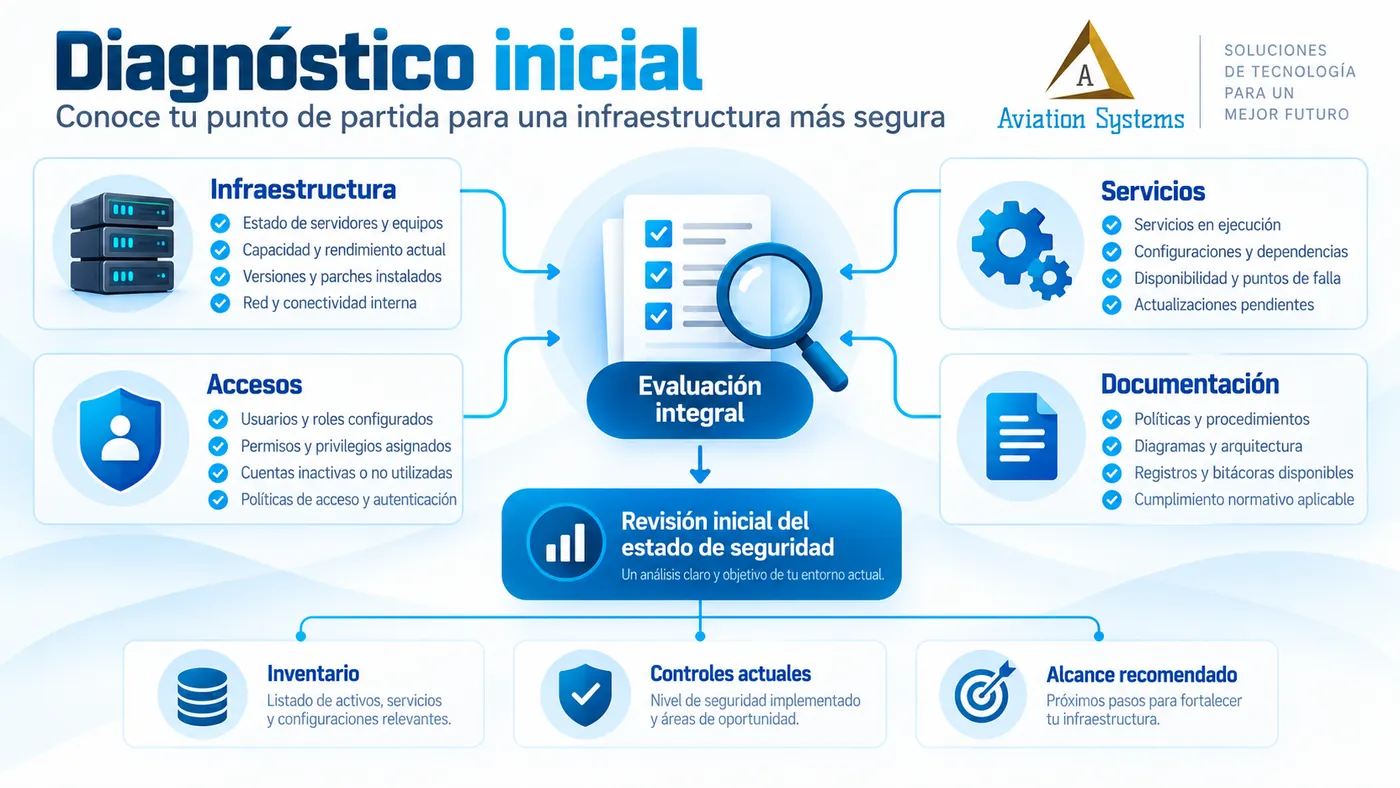
Security assessment and diagnosis

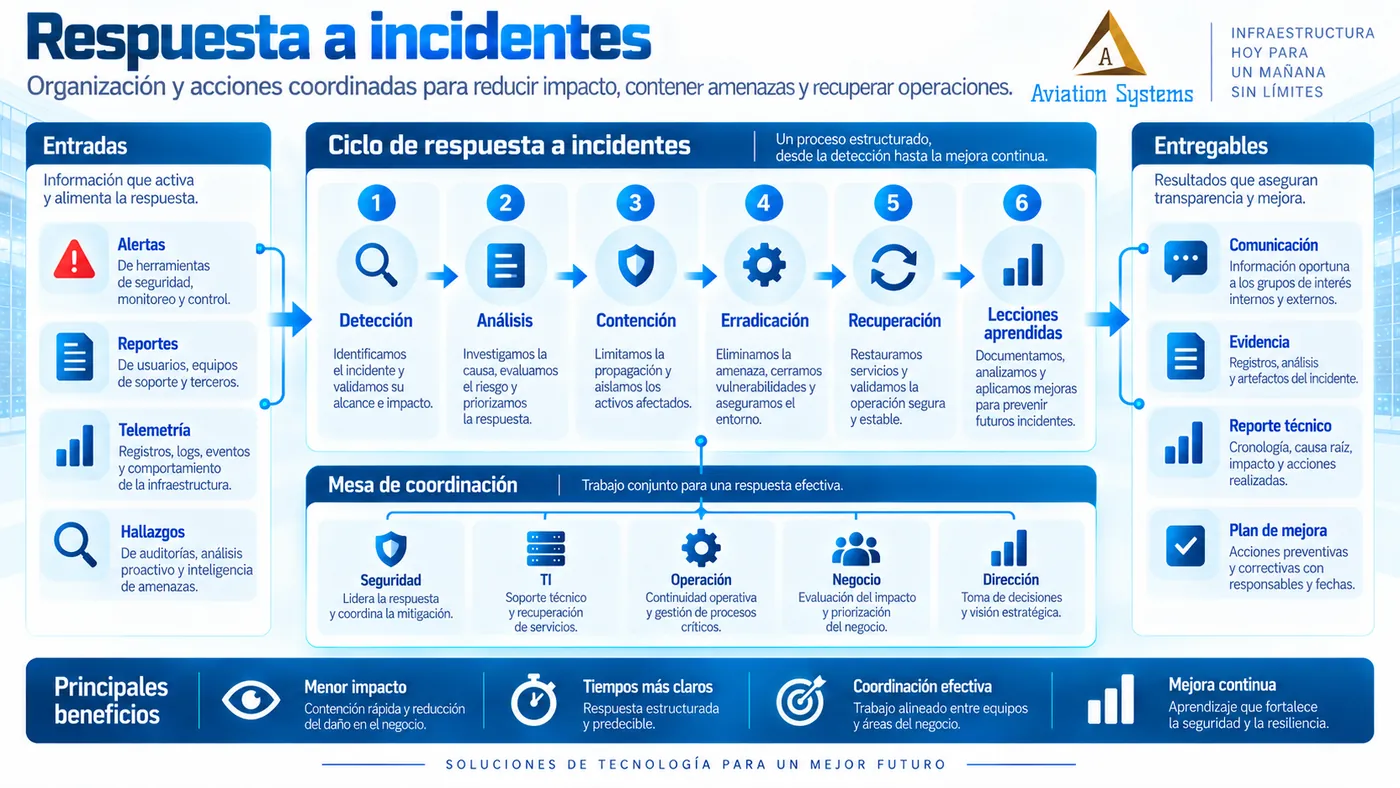
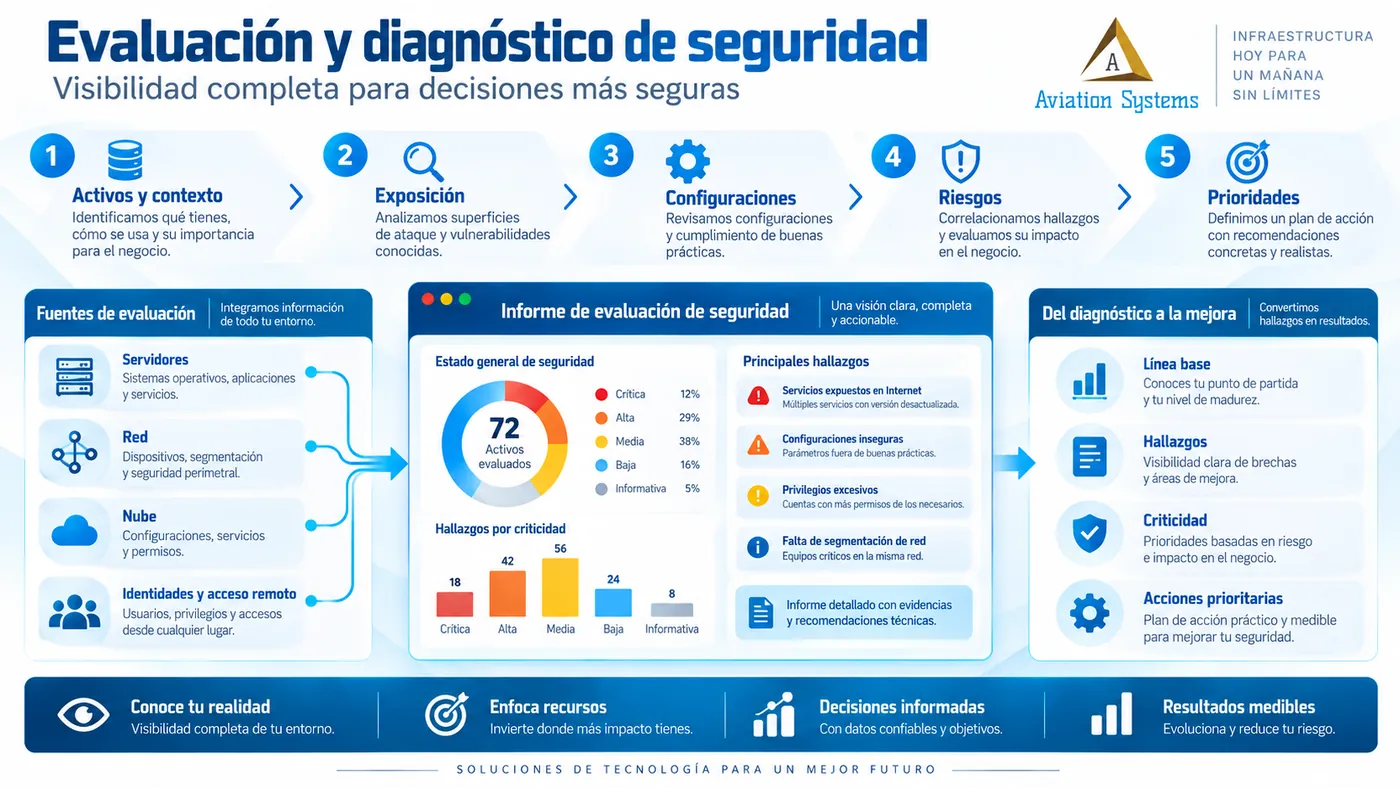
We assess the security posture of infrastructure, networks, servers, services and access to identify exposure, weak configurations, dependencies and operational risks. The result becomes an action plan prioritized by impact and feasibility.

Quote this service
Initial business cybersecurity assessment
Initial diagnosisWe review architecture, assets, access, services, documentation and existing controls to establish a security baseline.See what it includes →
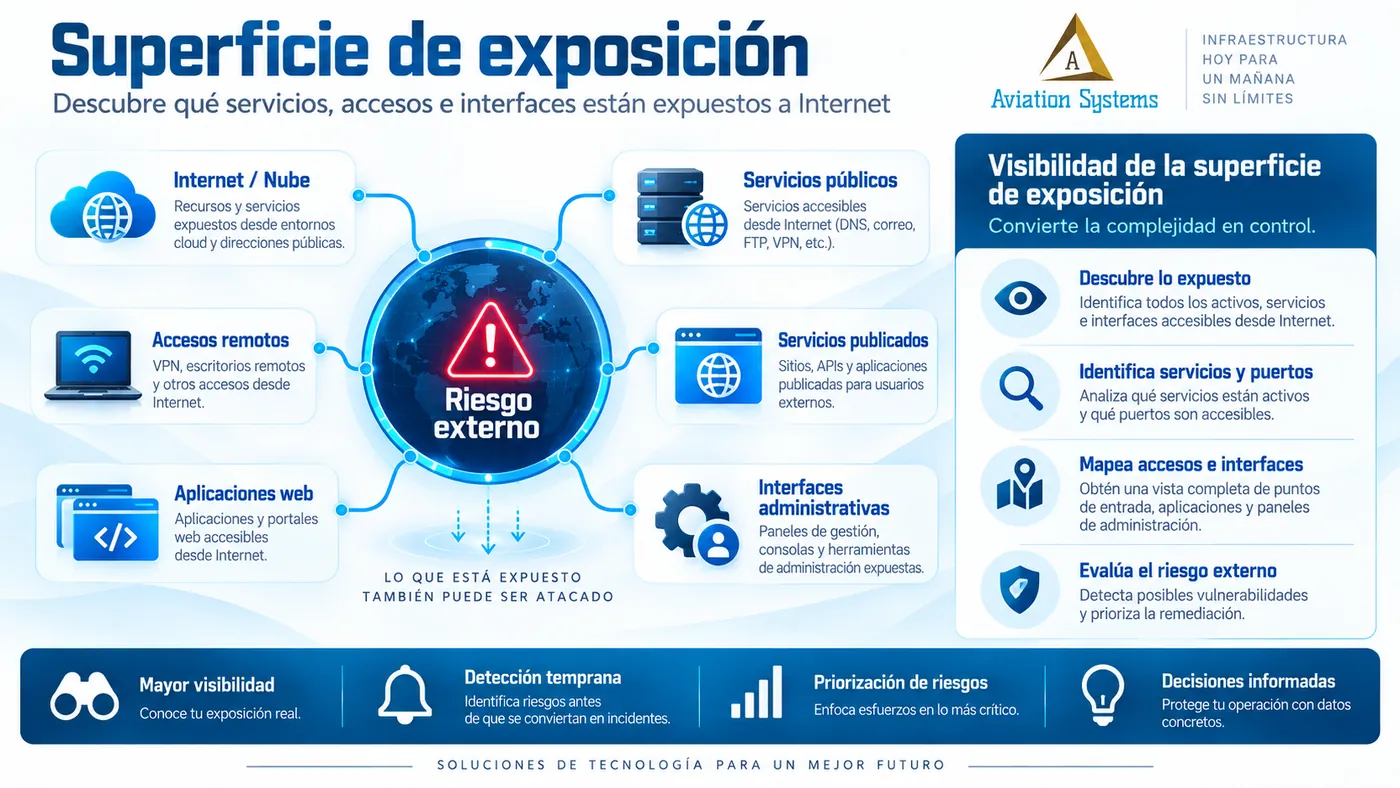
Infrastructure exposure surface analysis
Exposure surfaceWe identify published services, remote access, administrative interfaces and other points that can increase the organization's exposure.See what it includes →
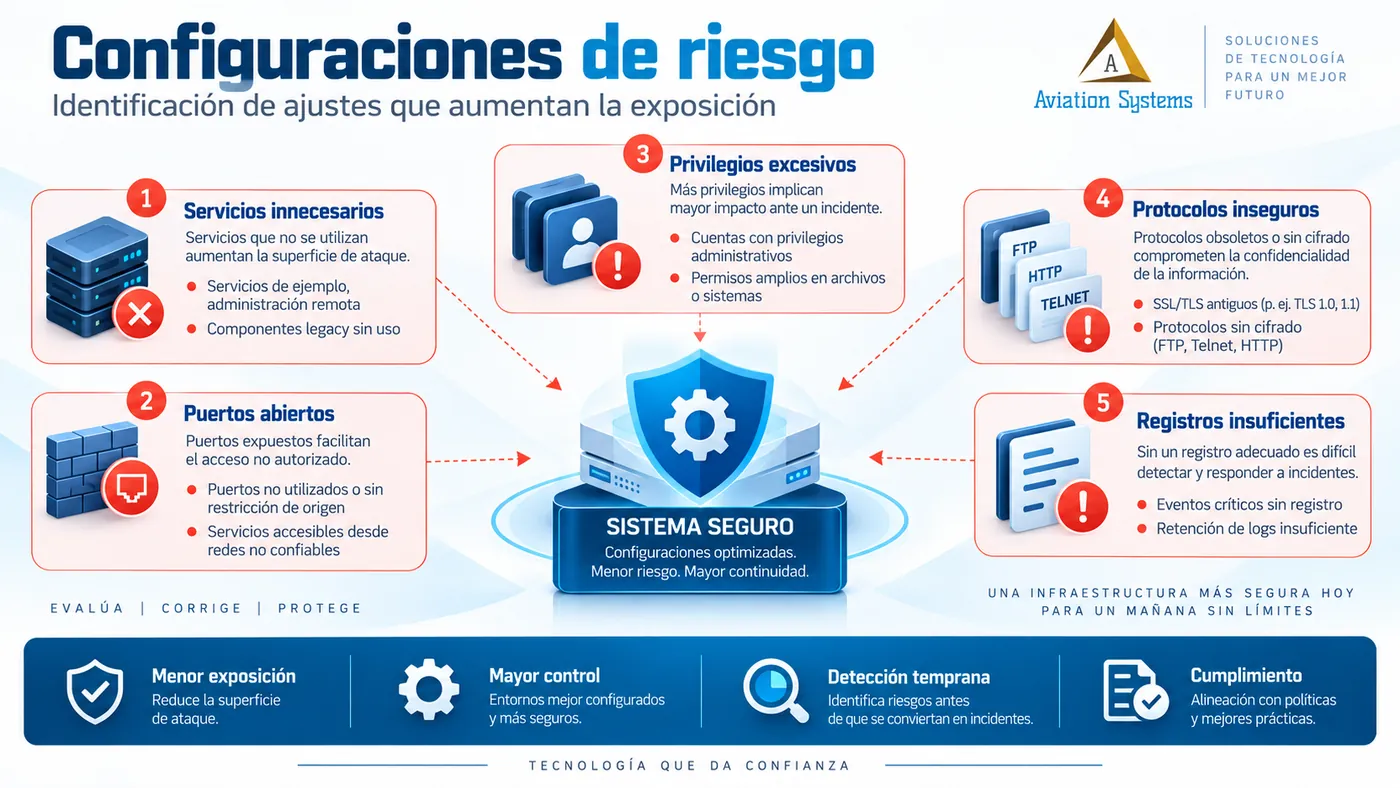
Review of risky configurations in systems and networks
Risky configurationsWe review configurations that can weaken servers, the network, identity or applications, comparing them with applicable best practices.See what it includes →
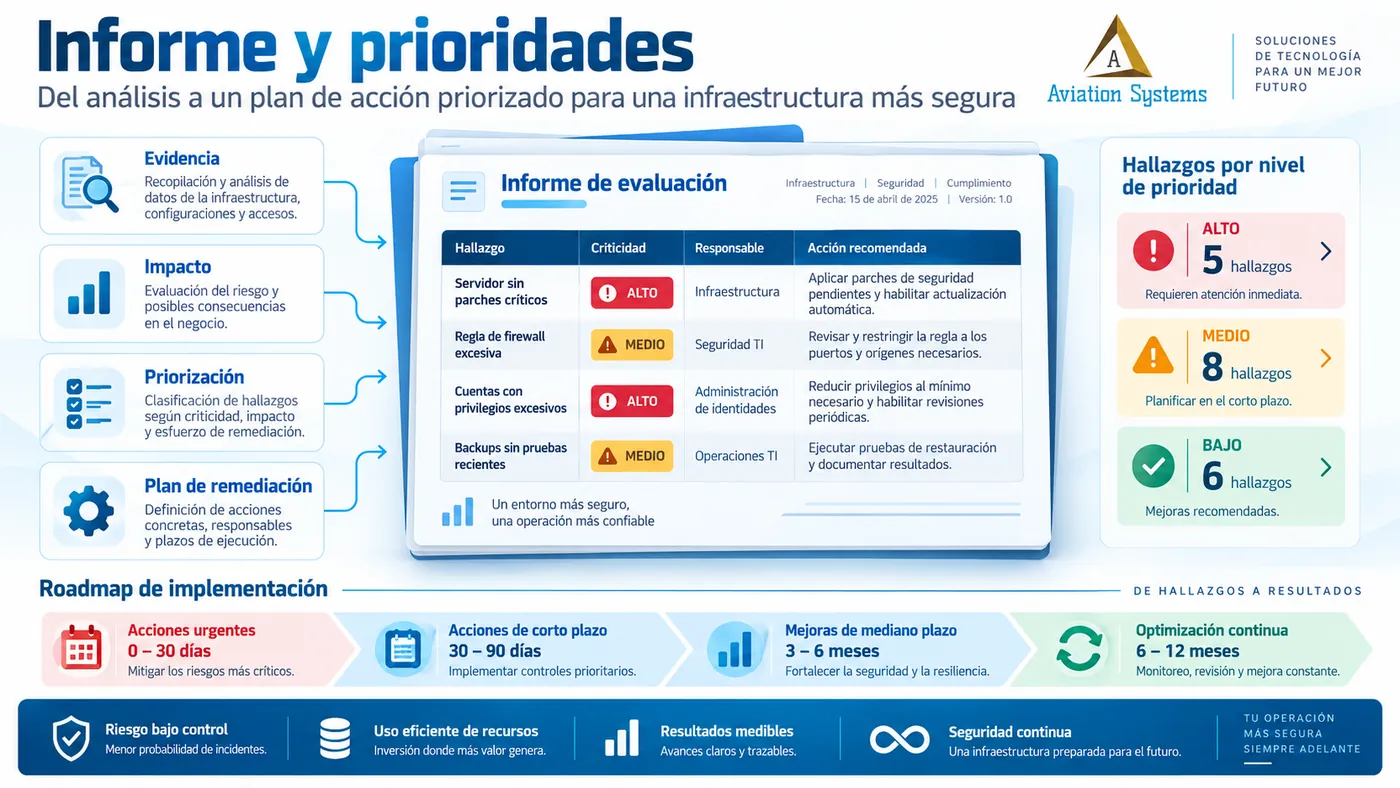
Cybersecurity report with remediation priorities
Report and prioritiesWe document findings, criticality, evidence and recommended actions to turn the assessment into an executable improvement plan.See what it includes →
Service 02

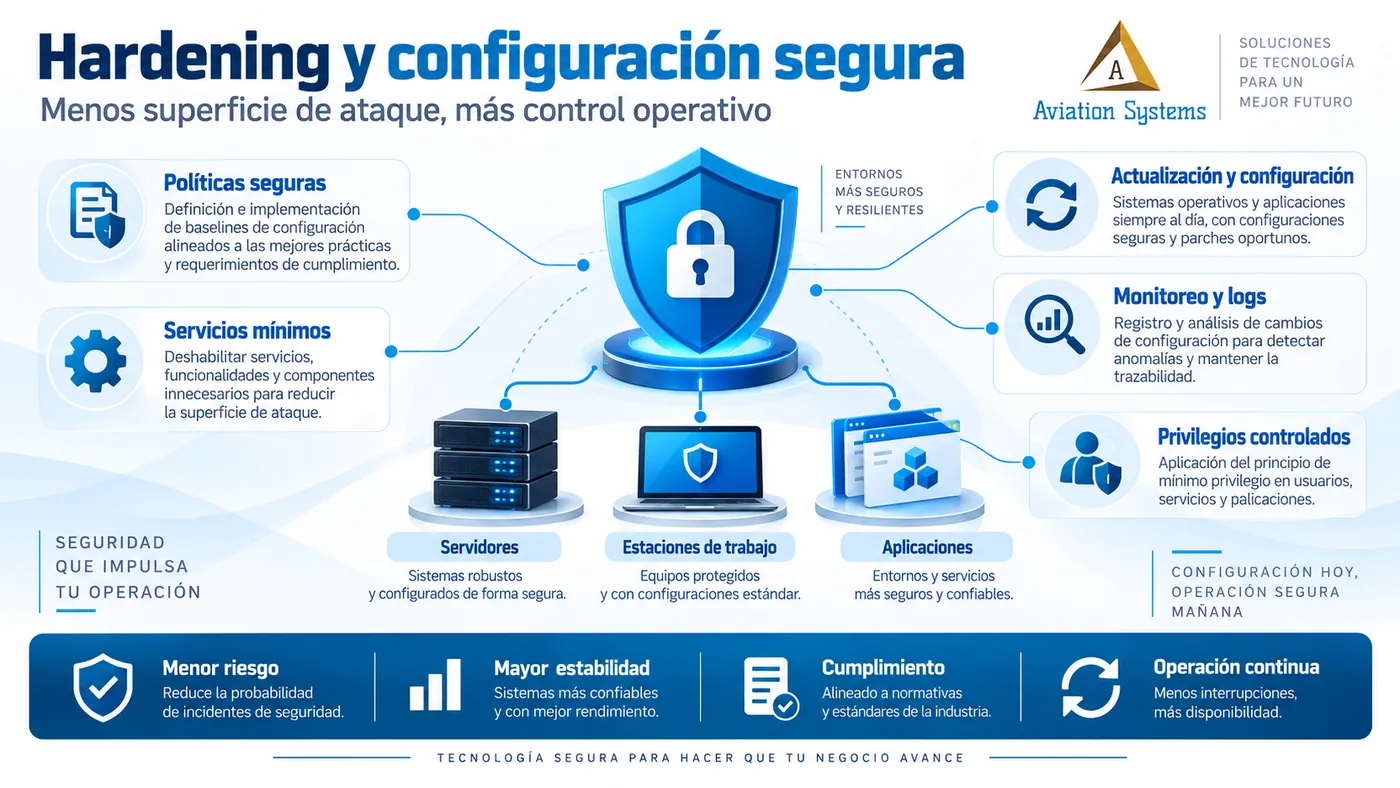
Hardening and secure configuration

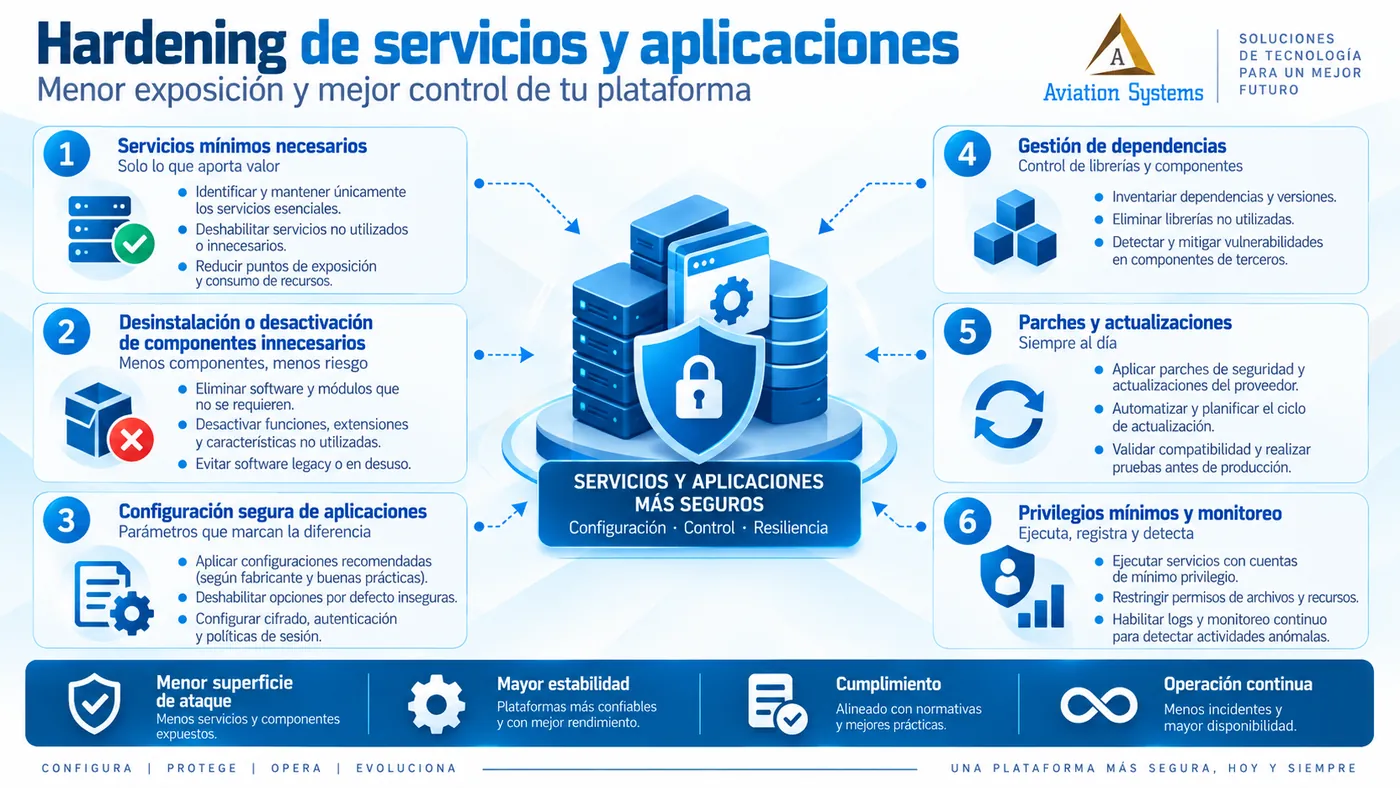
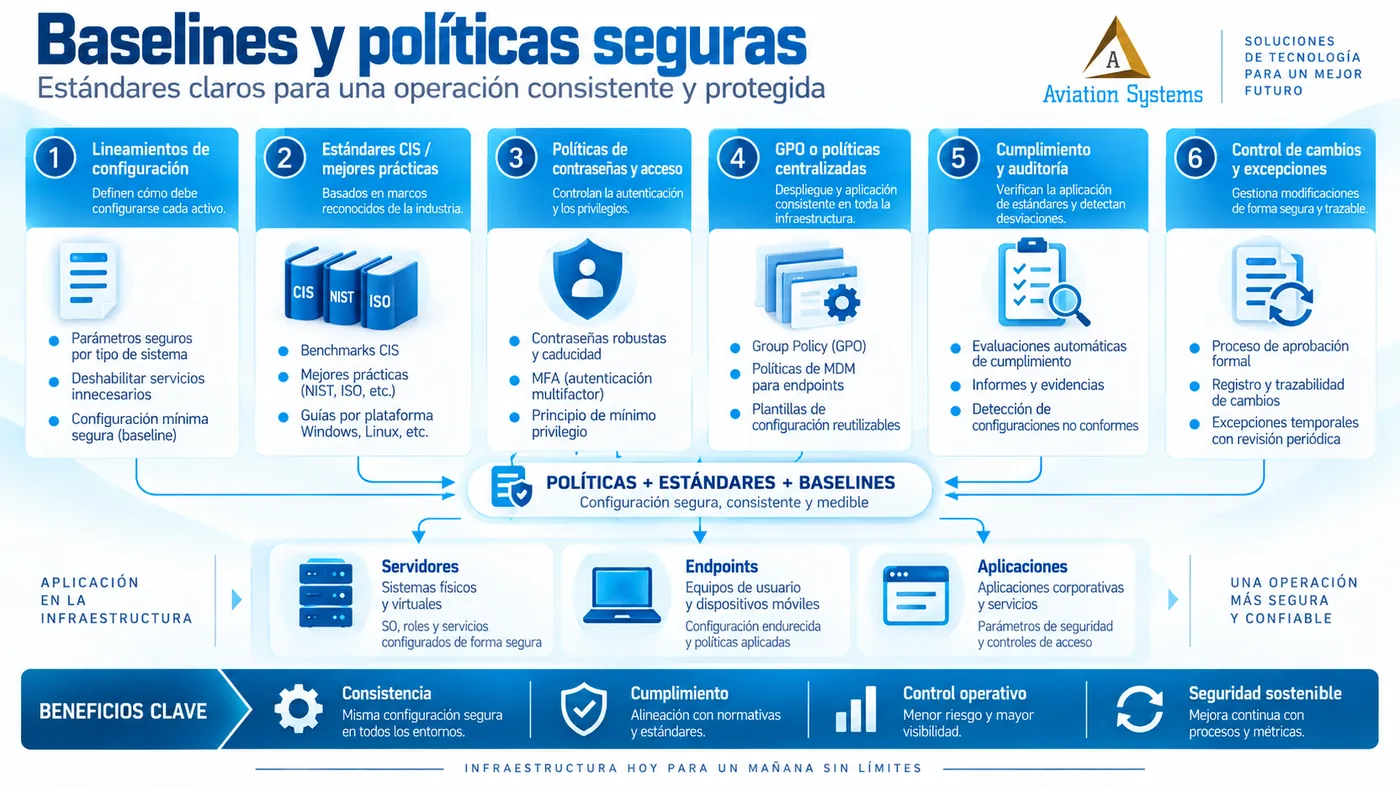
We harden servers, endpoints, services and infrastructure components to reduce unnecessary exposure. The scope can be based on references such as the CIS Benchmarks, internal policies and the specific requirements of the environment.

Quote this service
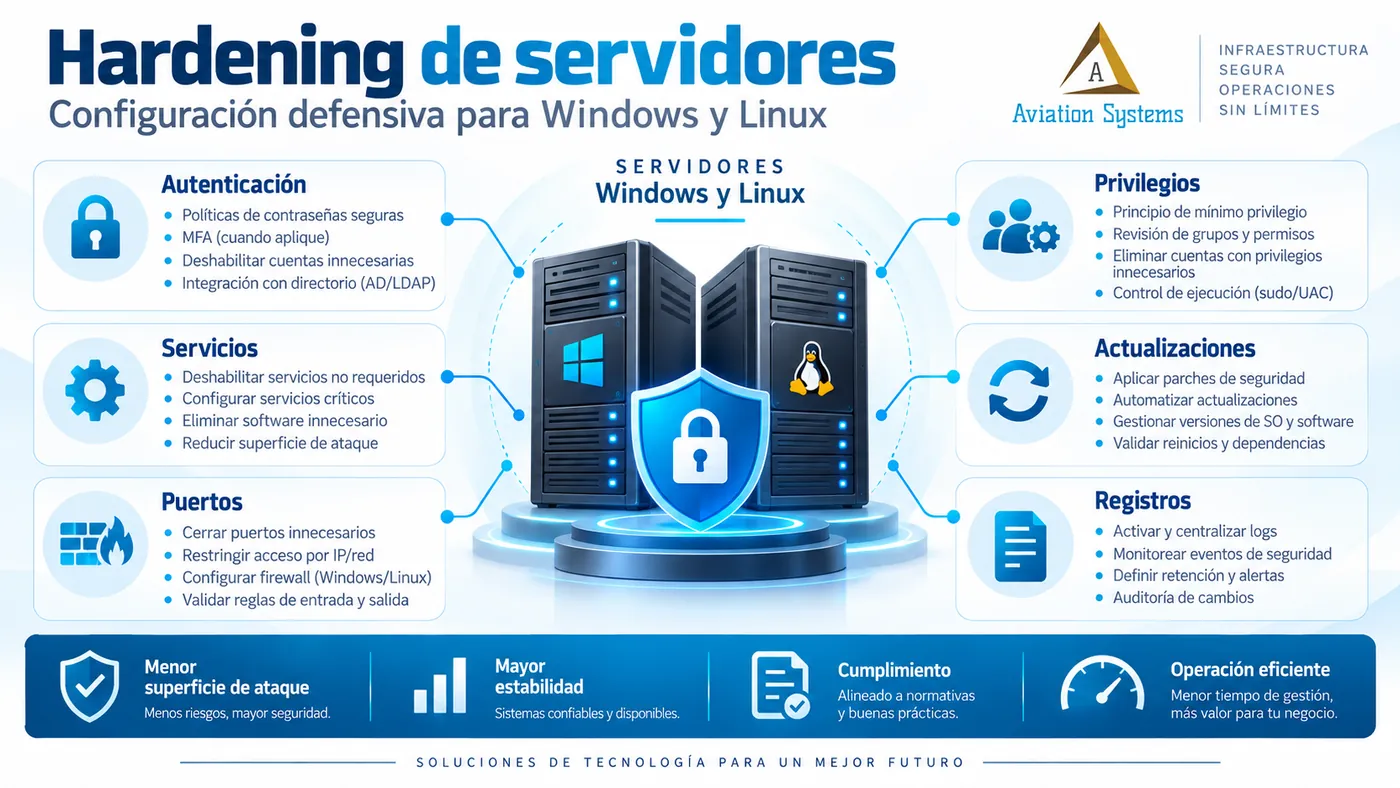
Windows and Linux server hardening
Server hardeningWe reduce unnecessary services and review privileges, authentication, logging, network and security settings on servers according to their role.See what it includes →
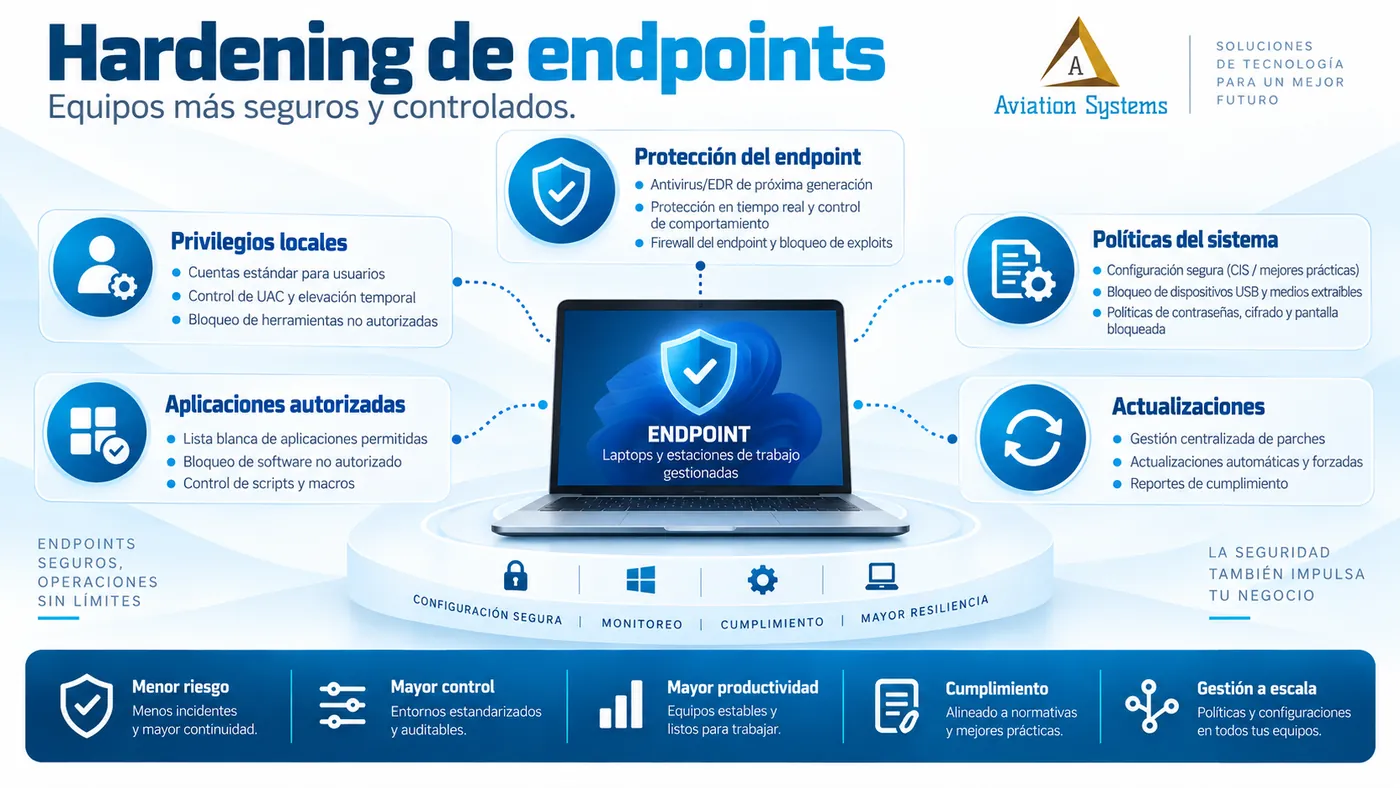
Endpoint hardening and secure configuration
Endpoint hardeningWe strengthen managed workstations and devices through policies, privilege control, system protection and removal of insecure configurations.See what it includes →
Secure configuration of services and applications
Services and applicationsWe review web services, databases, middleware and applications to remove default configurations and reduce operational exposure.See what it includes →
Secure configuration baselines and policies
Baselines and policiesWe define repeatable baseline configurations so new computers and servers start with a consistent minimum level of security.See what it includes →
Service 03

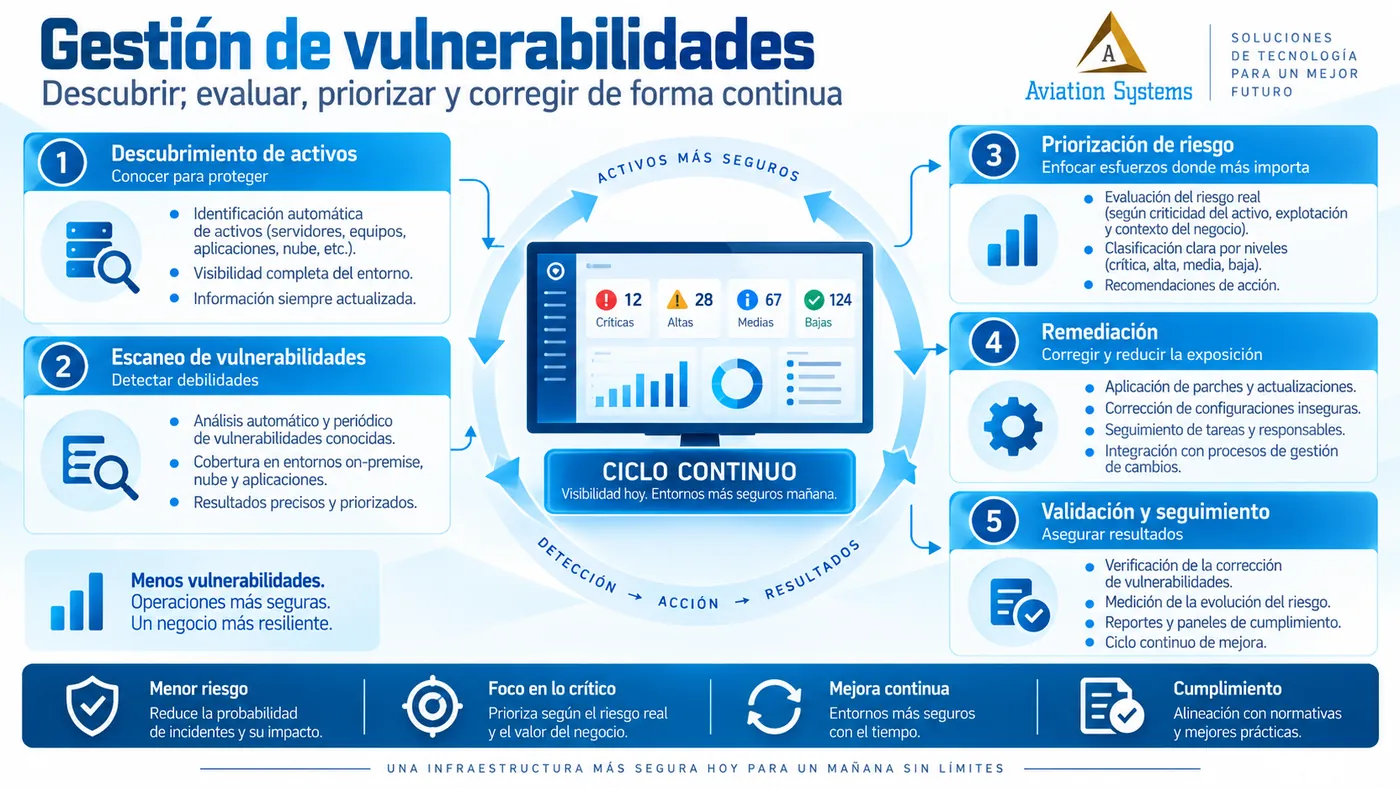
Vulnerability management

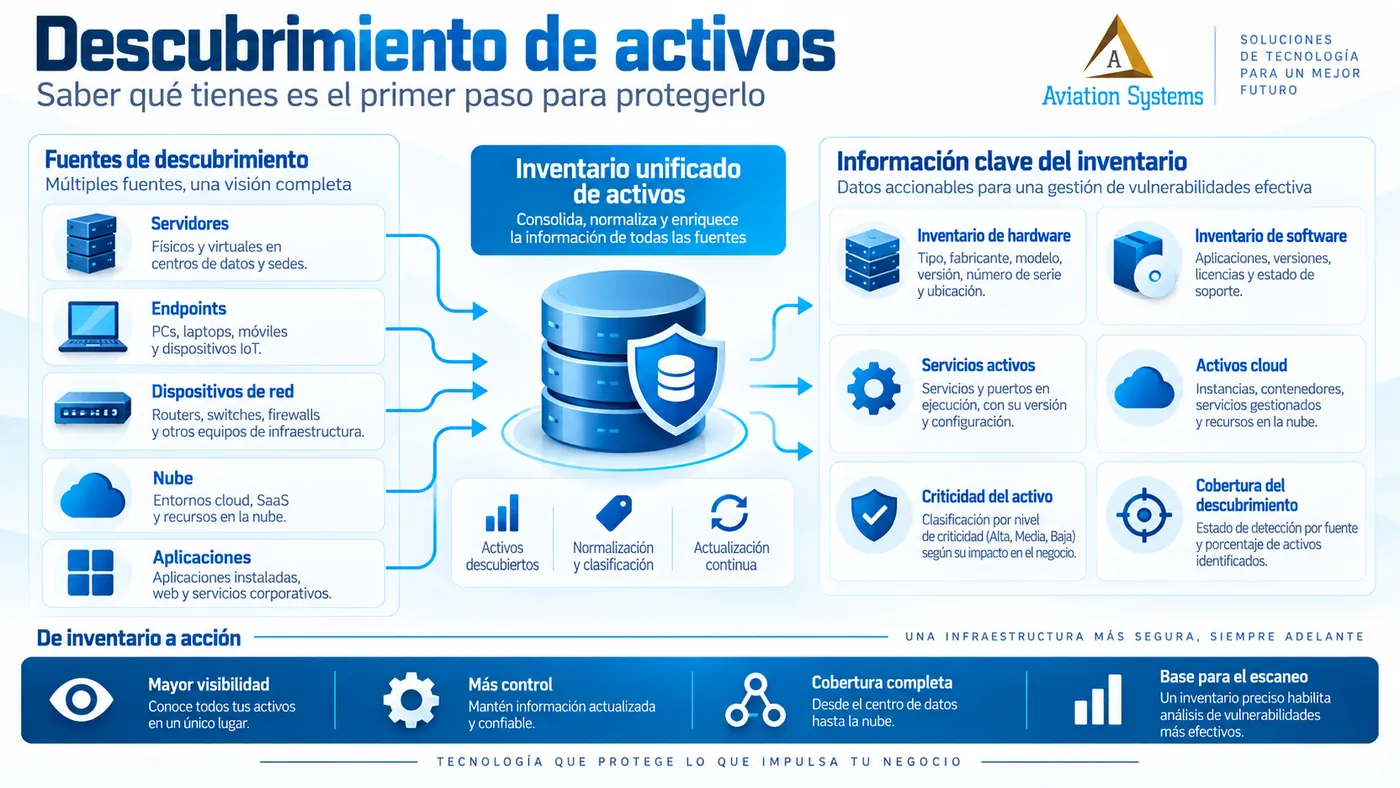
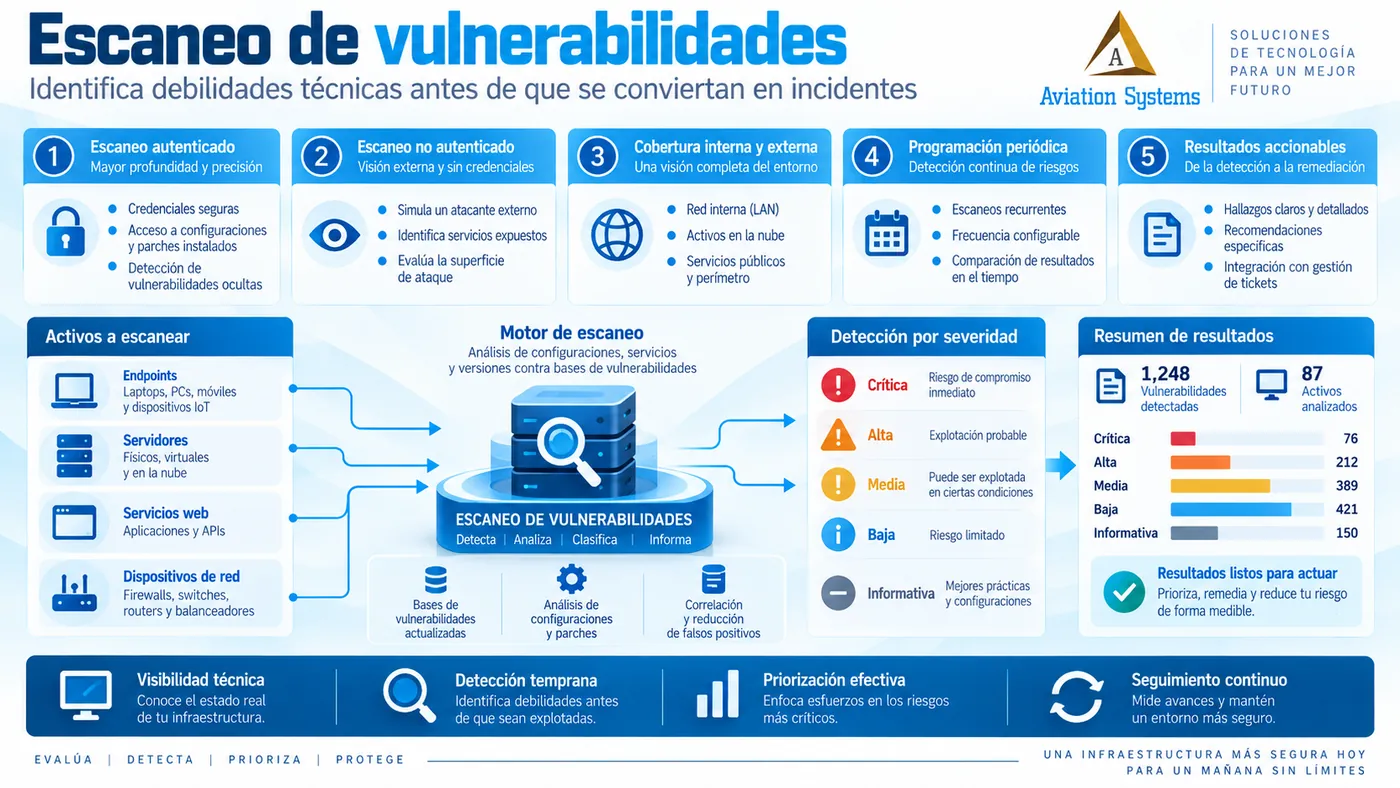
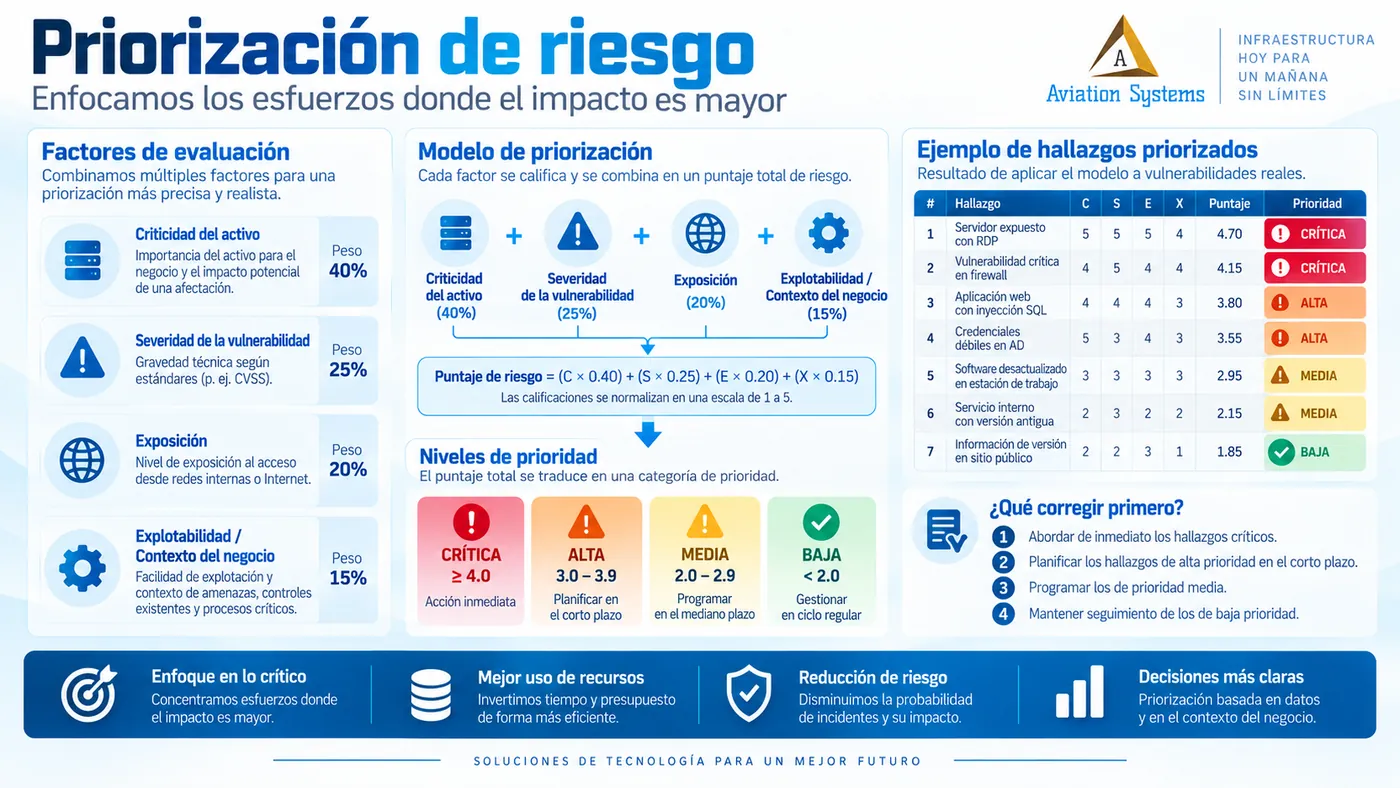
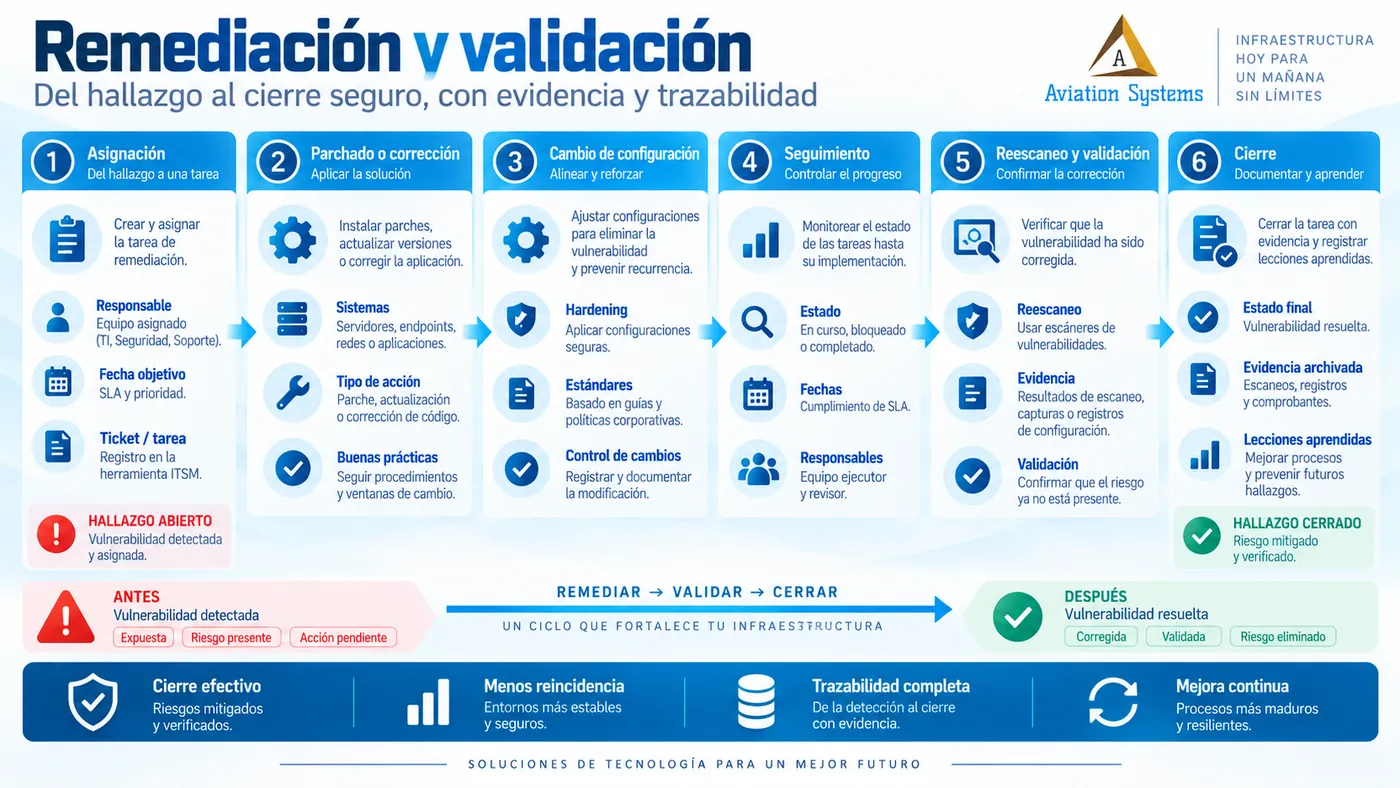
We manage vulnerabilities as a cycle, not as an isolated scan. We identify assets within the authorized scope, analyze findings, prioritize by risk and operational context, support remediation and then validate the changes.

Quote this service
Asset discovery for vulnerability management
Asset discoveryWe identify the assets to include in the process to reduce blind spots and link findings to specific systems.See what it includes →
Controlled infrastructure vulnerability scanning
Vulnerability scanningWe run authorized assessments on the defined assets and document vulnerabilities, versions, configurations and relevant evidence.See what it includes →
Risk-based vulnerability prioritization
Risk-based prioritizationWe combine technical severity, exposure, asset criticality and business context to decide what to fix first.See what it includes →
Vulnerability remediation and validation
Remediation and validationWe support the fixes and validate again to confirm whether the risk was reduced or requires additional actions.See what it includes →
Service 04

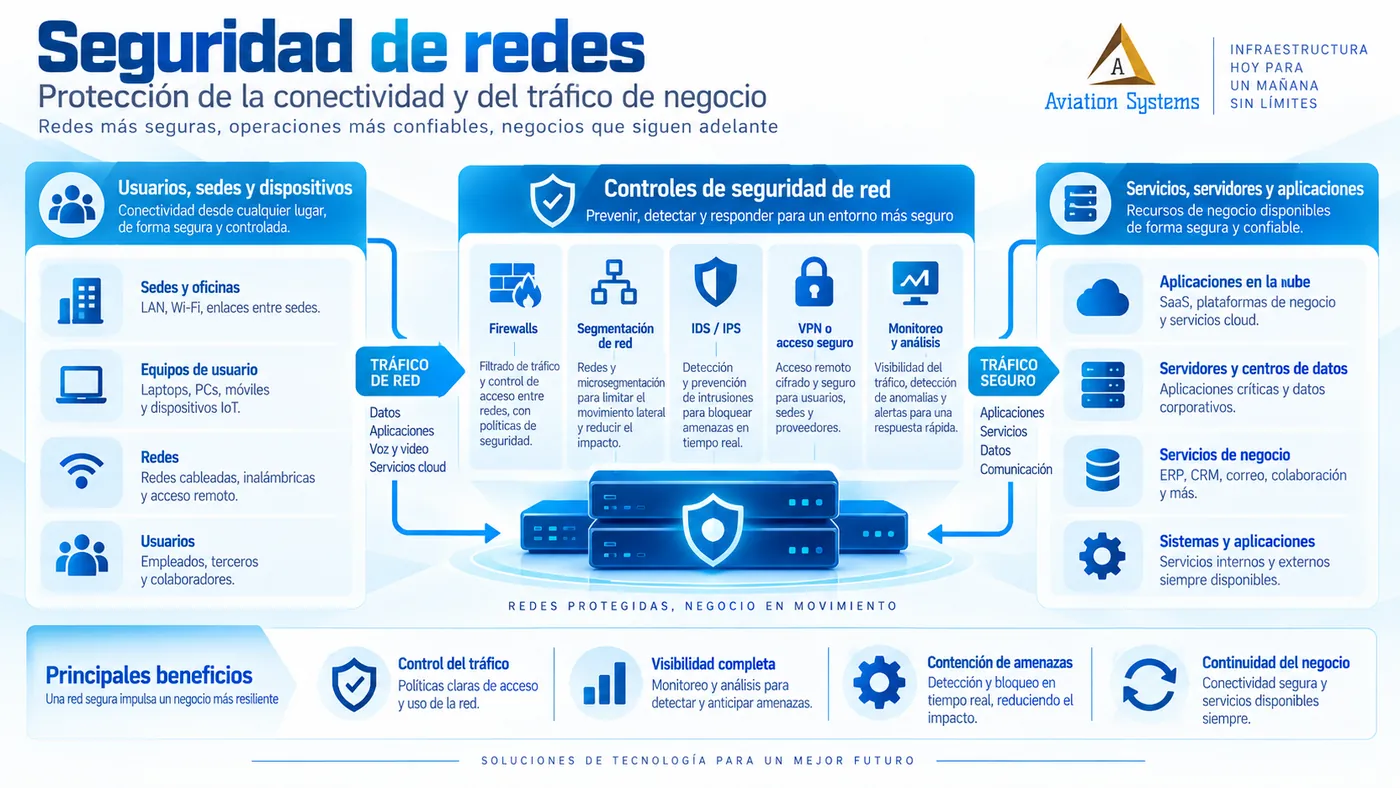
Network security

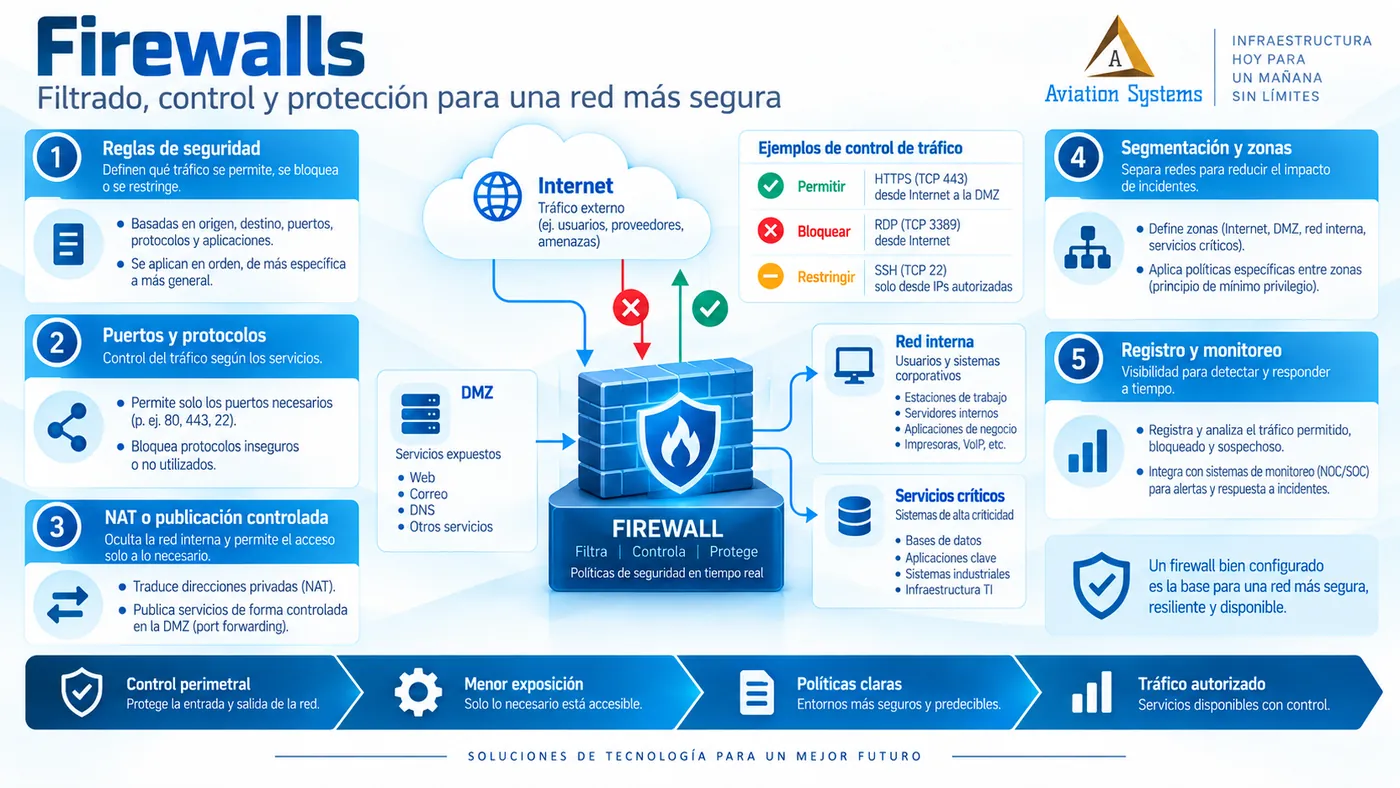
We design and configure network security controls to regulate traffic between the Internet, sites, servers, users and internal segments. Rules are defined from the services that are actually needed, not from broad default permissions.

Quote this service
Business firewall for traffic and service control
FirewallsWe implement or tune firewalls to allow the necessary flows, reduce exposure and keep rules understandable and documented.See what it includes →
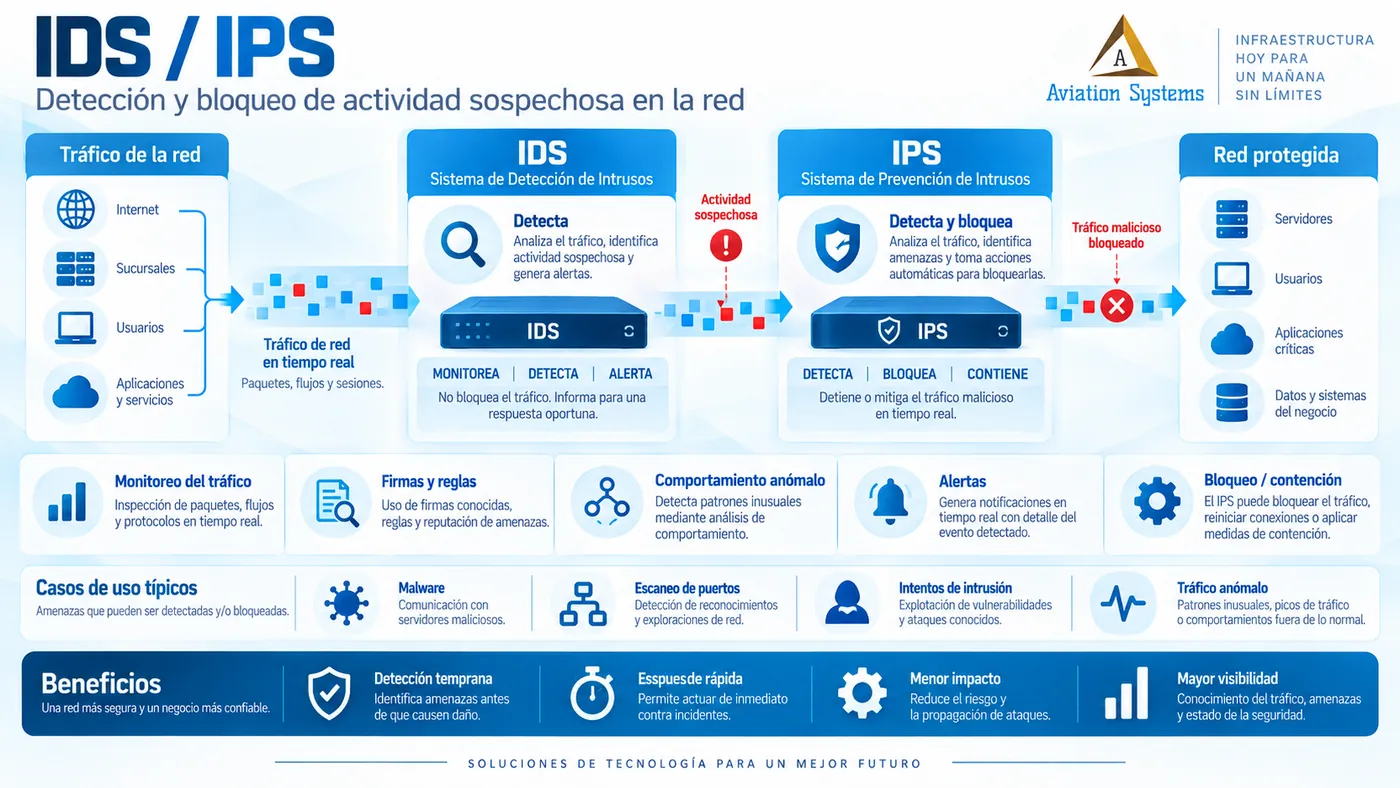
IDS and IPS for network detection and prevention
IDS / IPSWe integrate detection or prevention capabilities when the architecture and risk level justify additional traffic inspection.See what it includes →
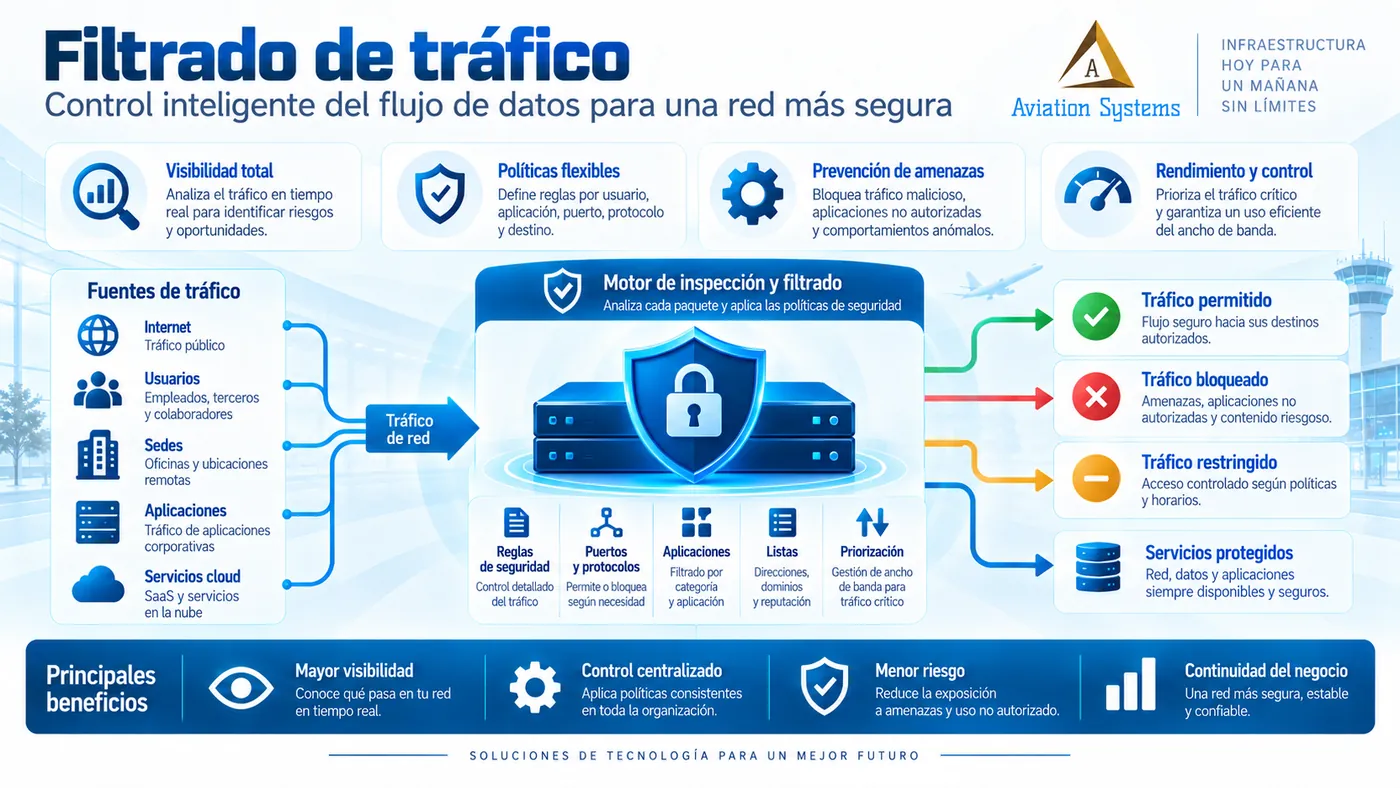
Business network traffic filtering
Traffic filteringWe apply restrictions by source, destination, service, segment or context to reduce unnecessary communications.See what it includes →
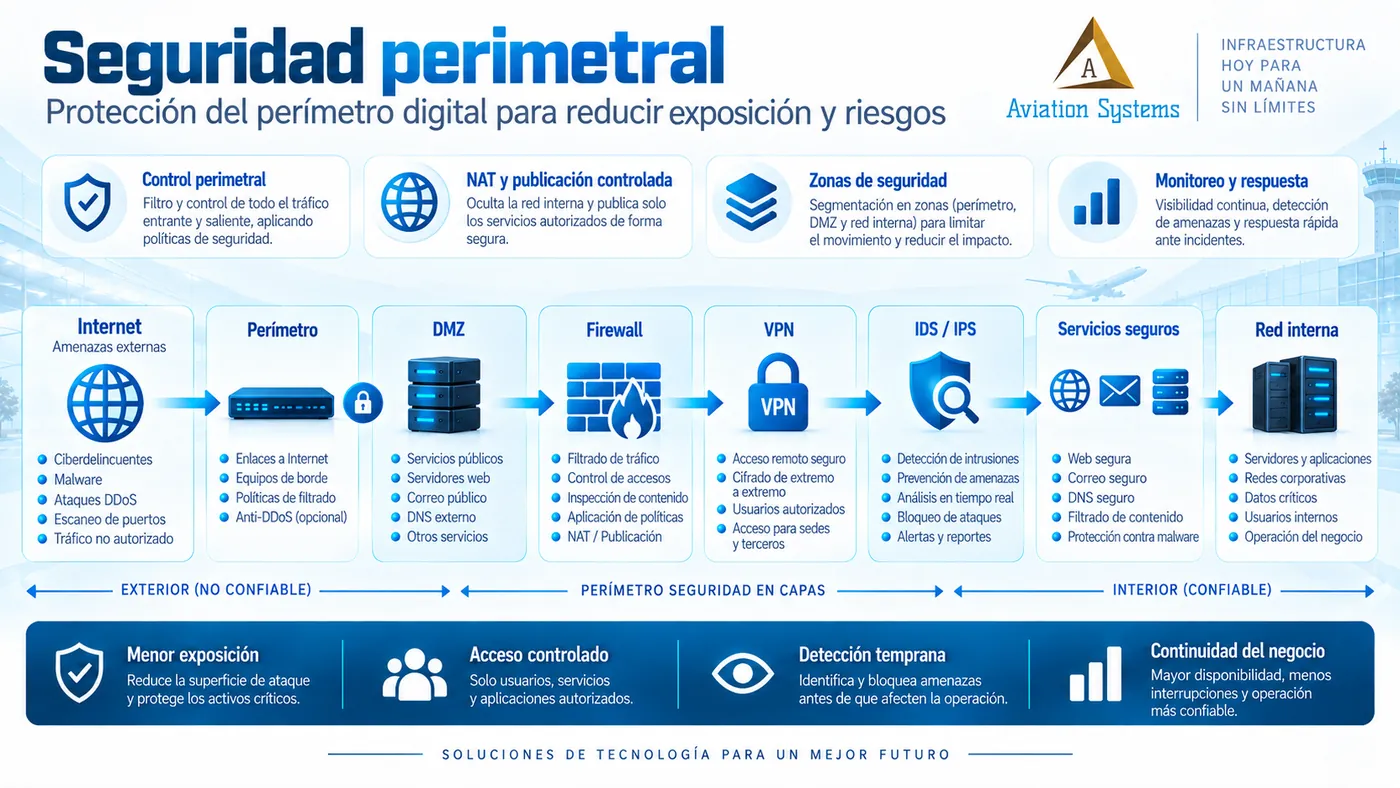
Business perimeter security architecture
Perimeter securityWe define zones, public exposure, remote access and control points to protect the boundary between trusted and untrusted networks.See what it includes →
Service 05

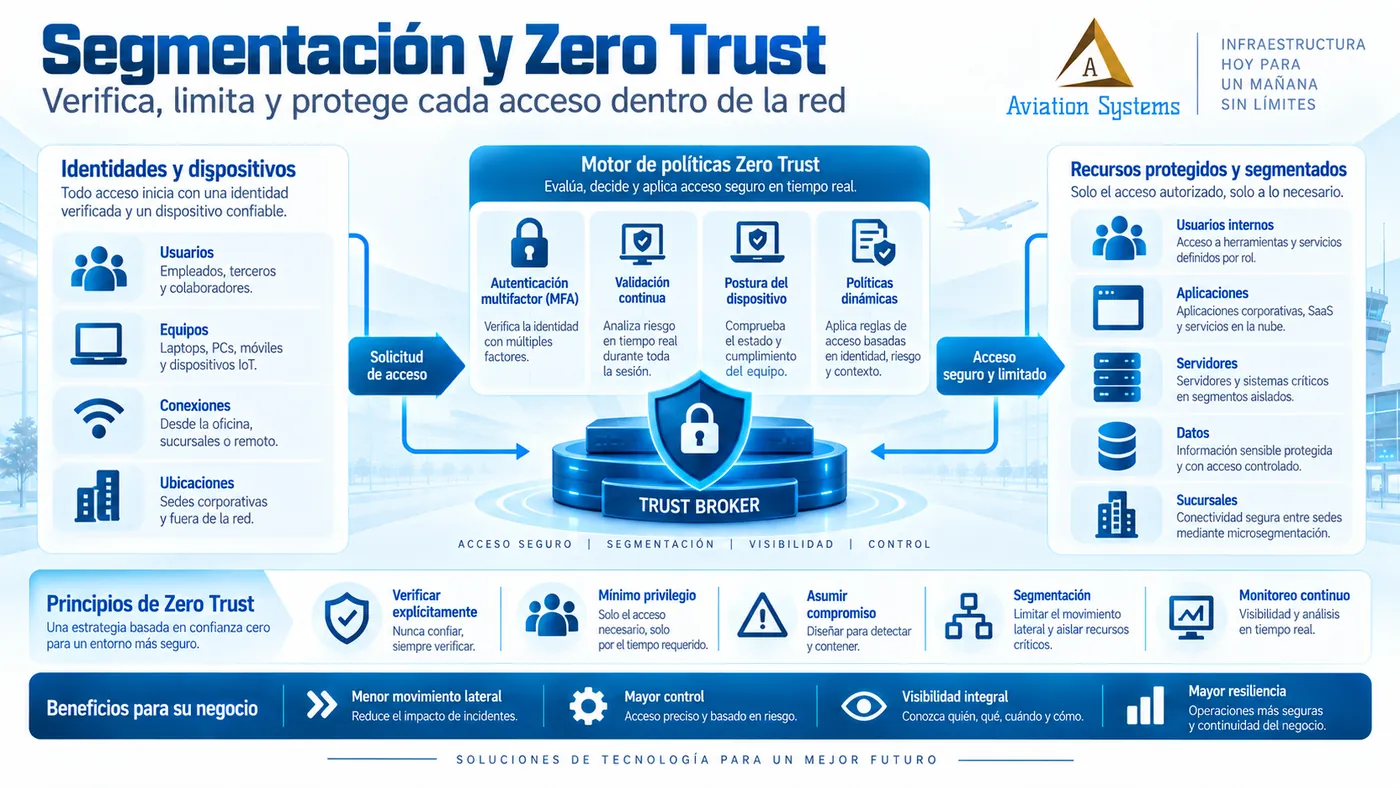
Segmentation and Zero Trust

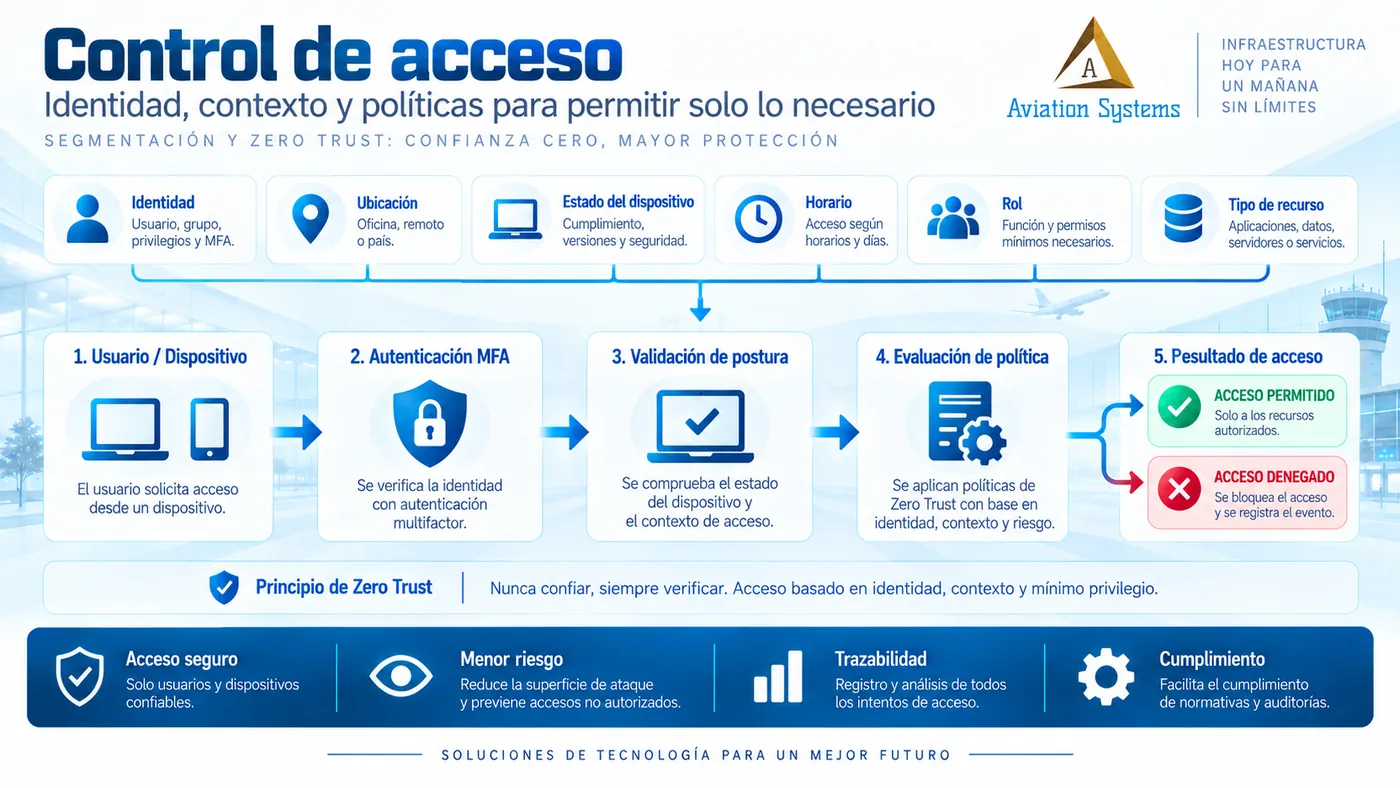
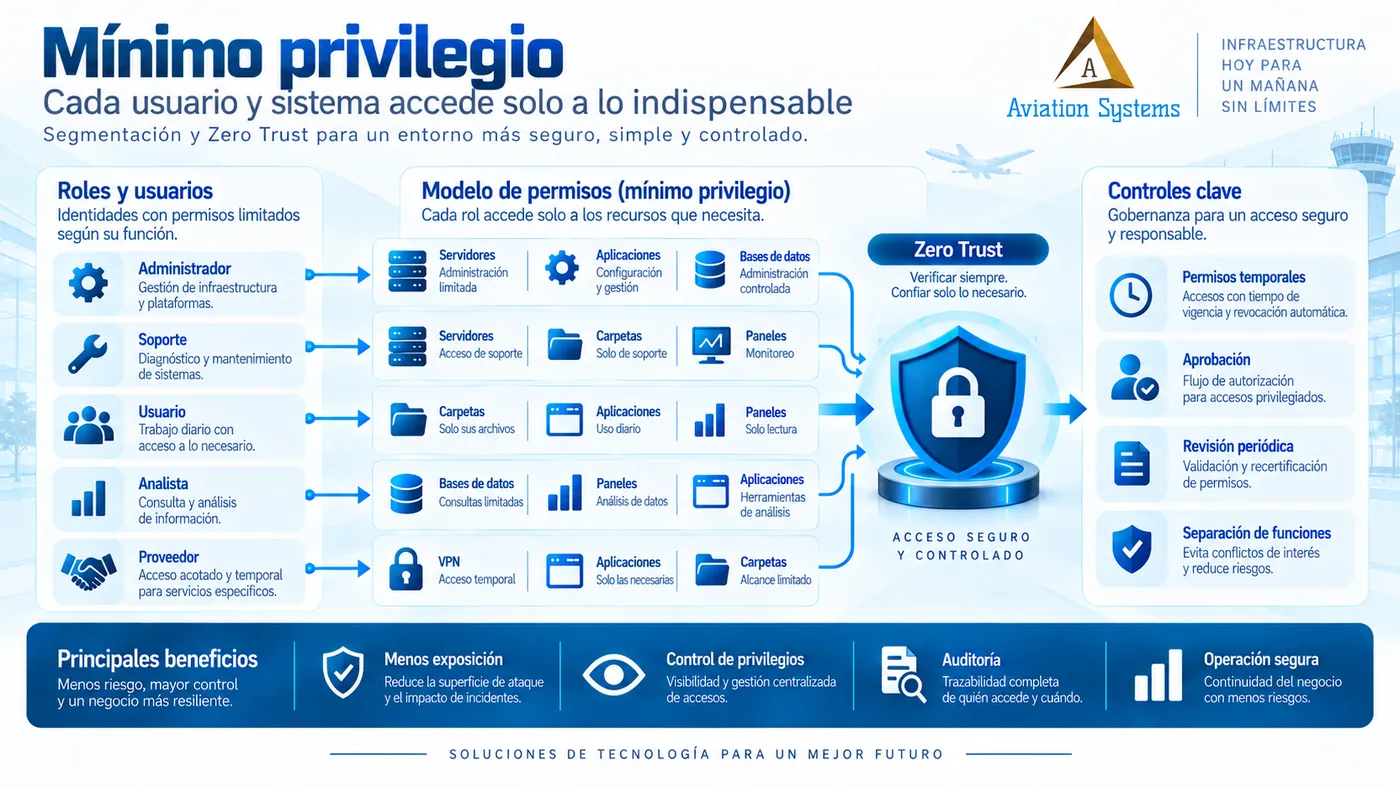
We reduce lateral movement through segmentation and explicit access policies. The Zero Trust approach is applied as a progressive architecture: identify resources, verify identity, limit privileges and control every necessary access path.

Quote this service
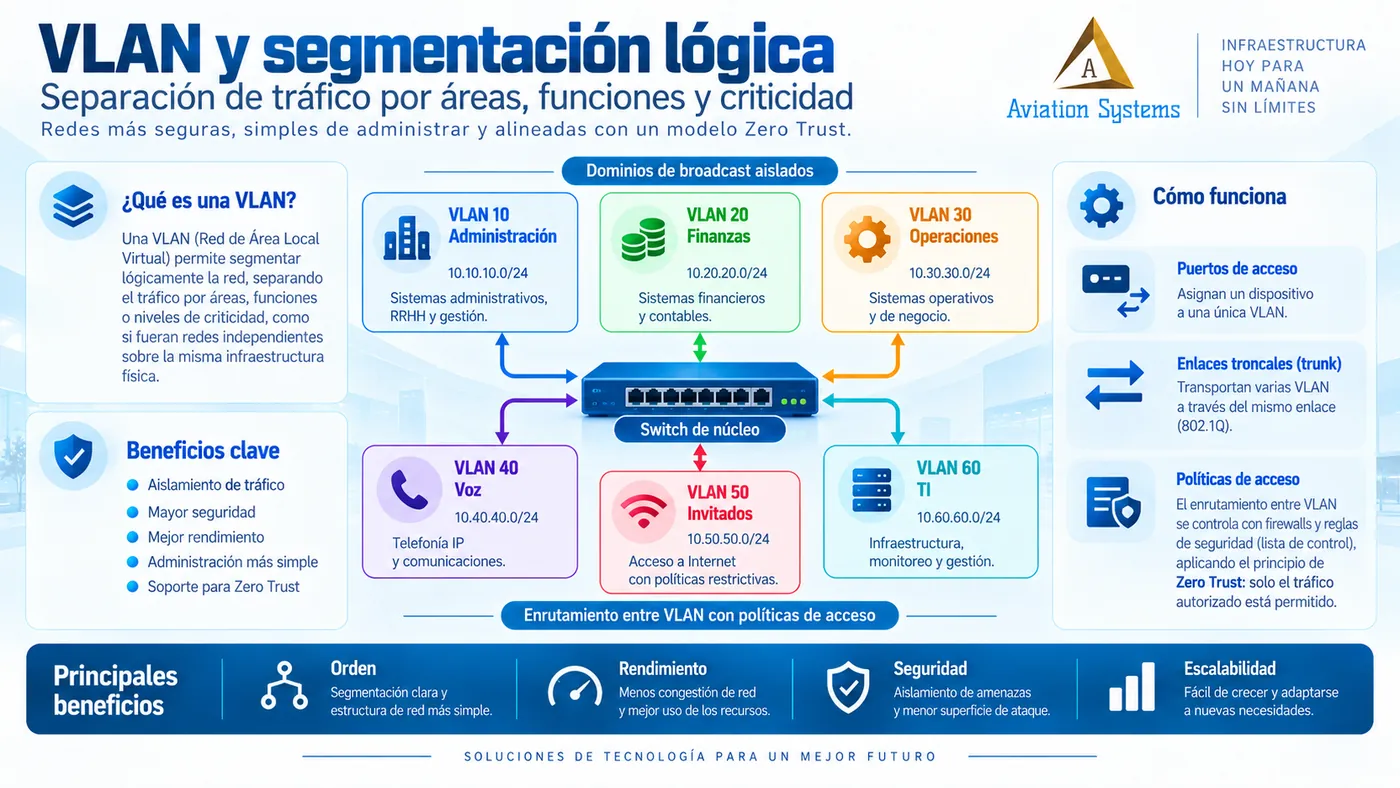
VLANs and security zones for business segmentation
VLANs and security zonesWe separate users, servers, cameras, guests, administration and other groups to reduce the reach of a failure or compromise.See what it includes →
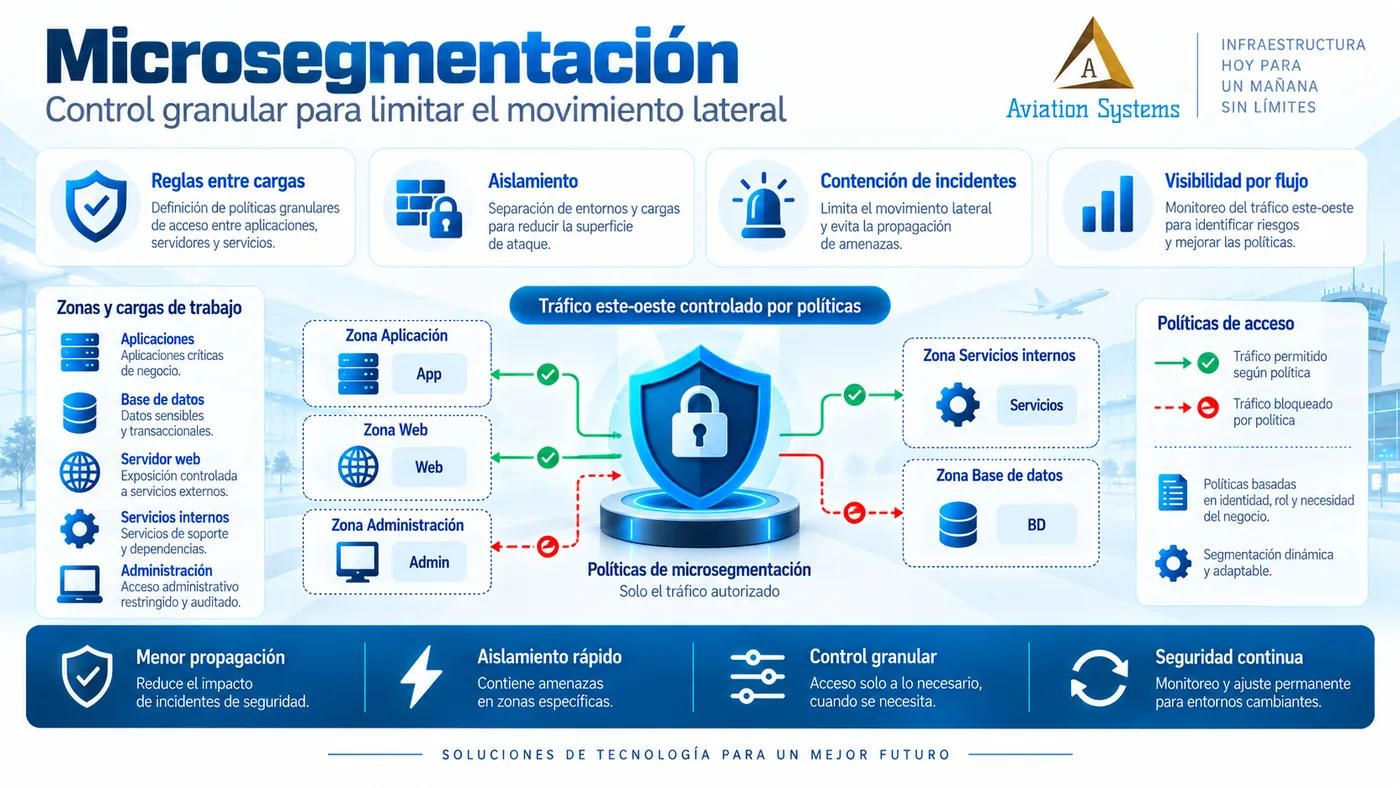
Microsegmentation of workloads and services
MicrosegmentationWe apply more granular controls between workloads or asset groups when criticality requires limiting lateral communication.See what it includes →
Access control based on identity and context
Access controlWe define who can access each resource, from which context and under which controls, avoiding broad access to the whole network.See what it includes →
Least-privilege principle in infrastructure
Least privilegeWe reduce administrative permissions and standing access so users and systems have only what they need.See what it includes →
Service 06

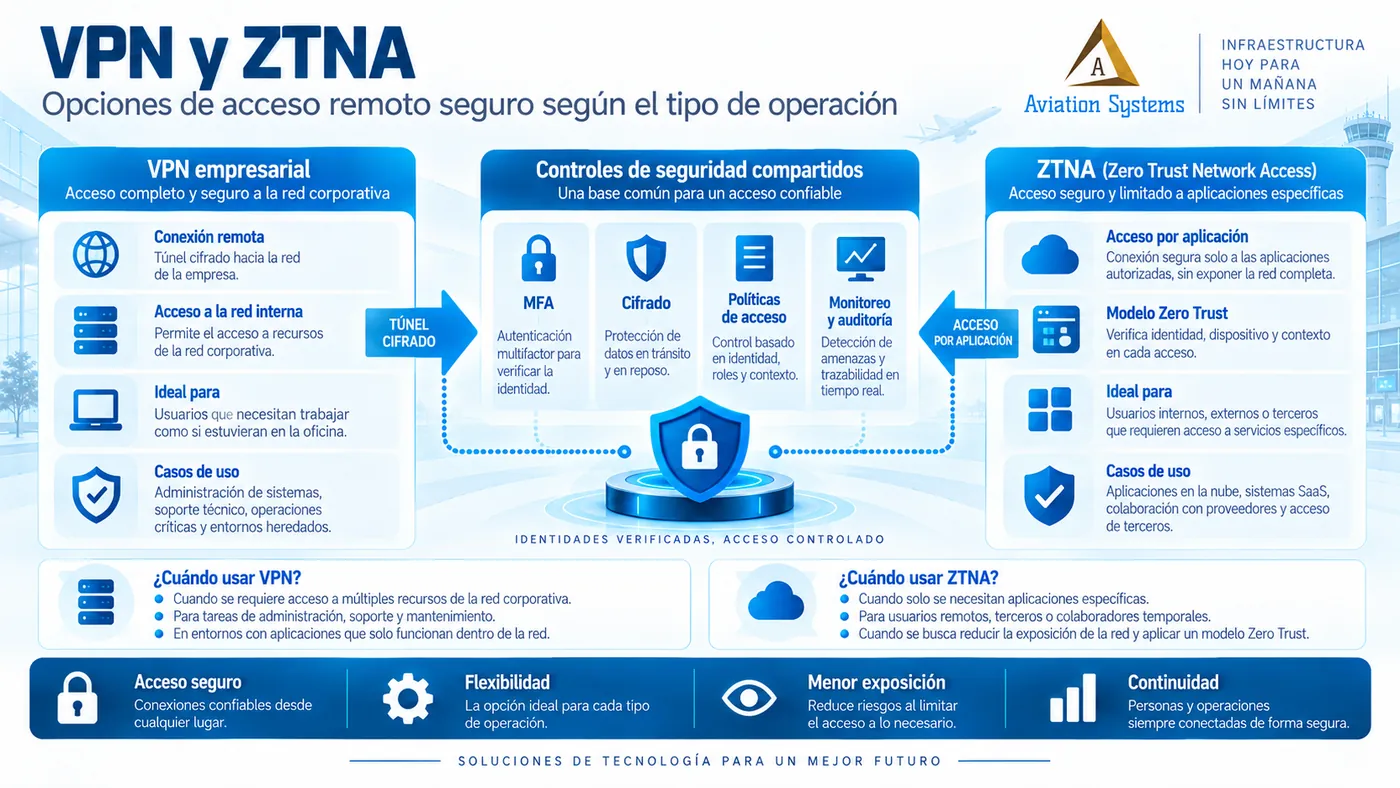
VPN, ZTNA and secure access

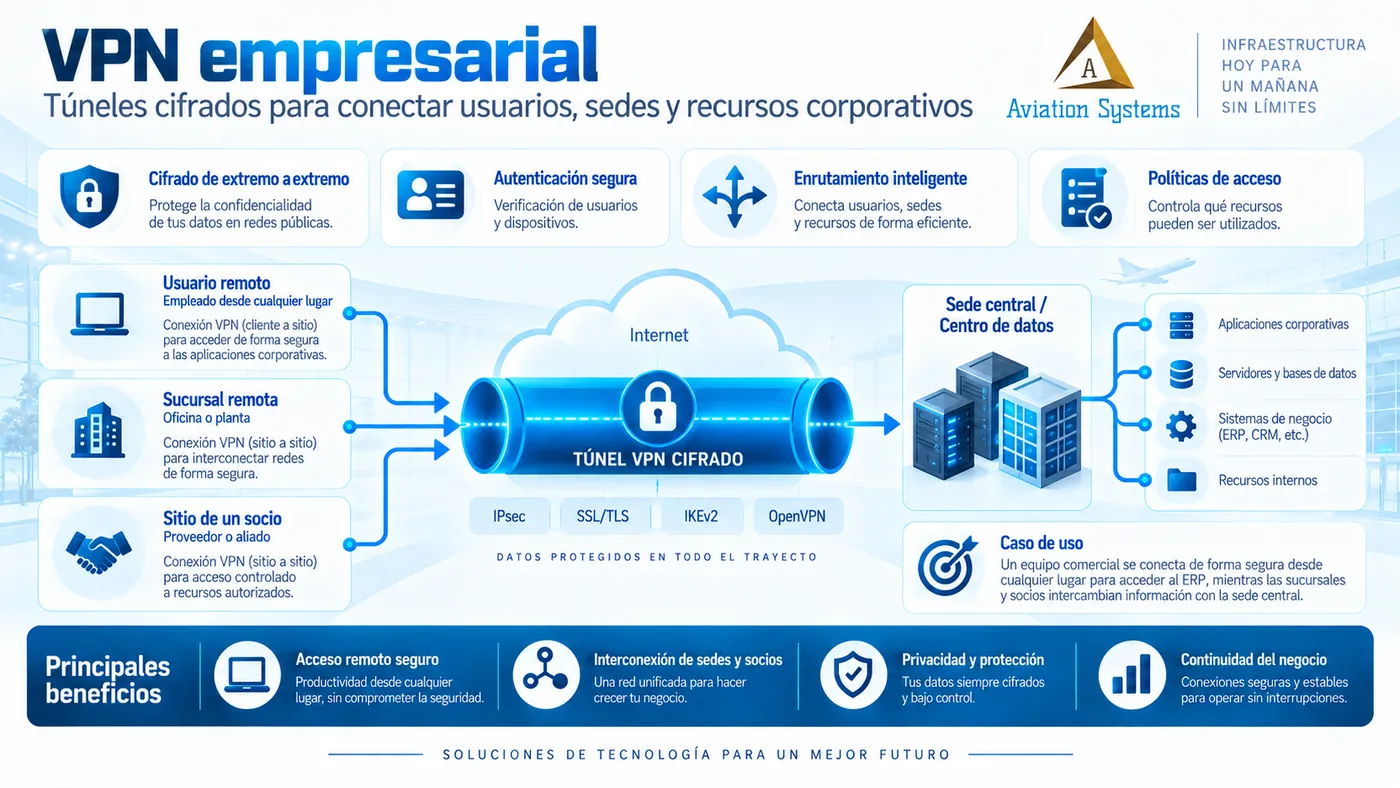
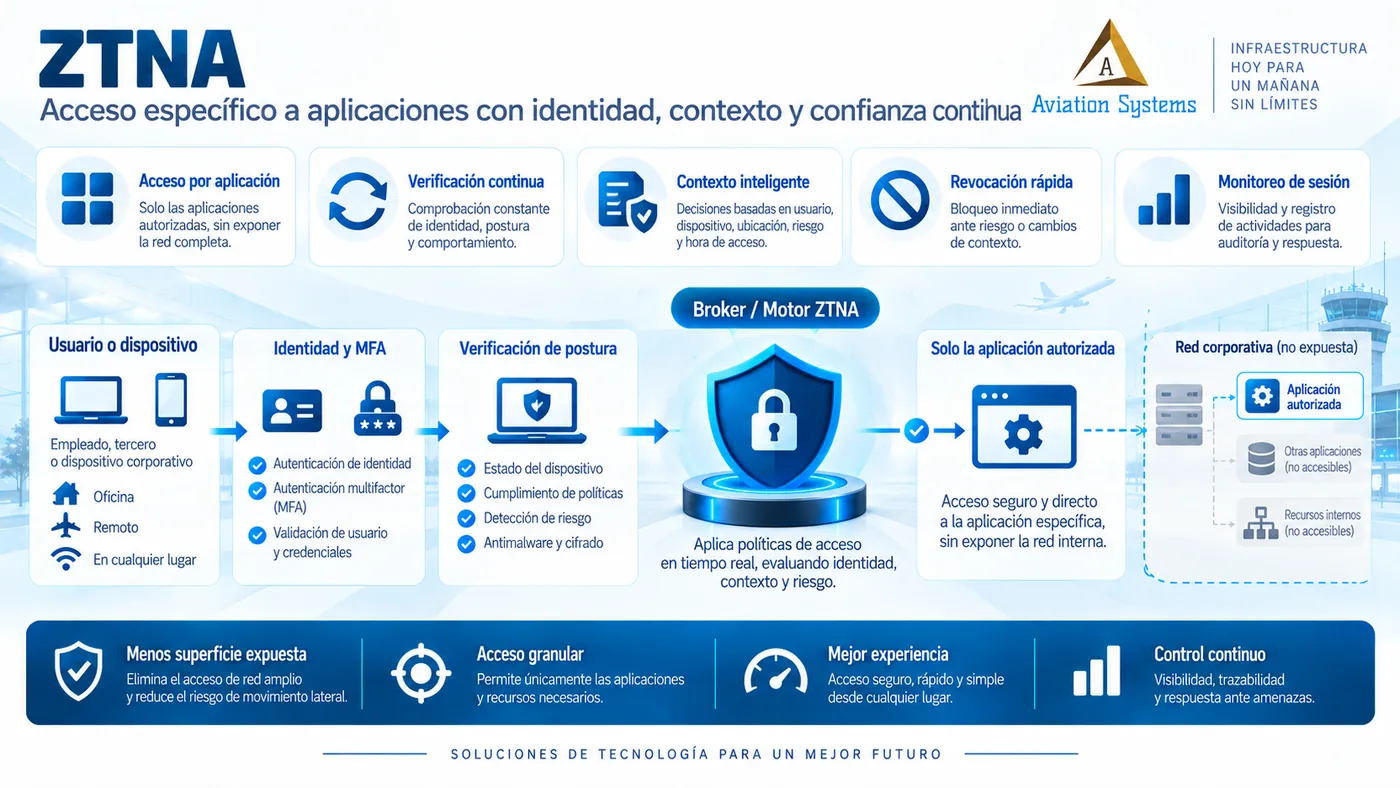
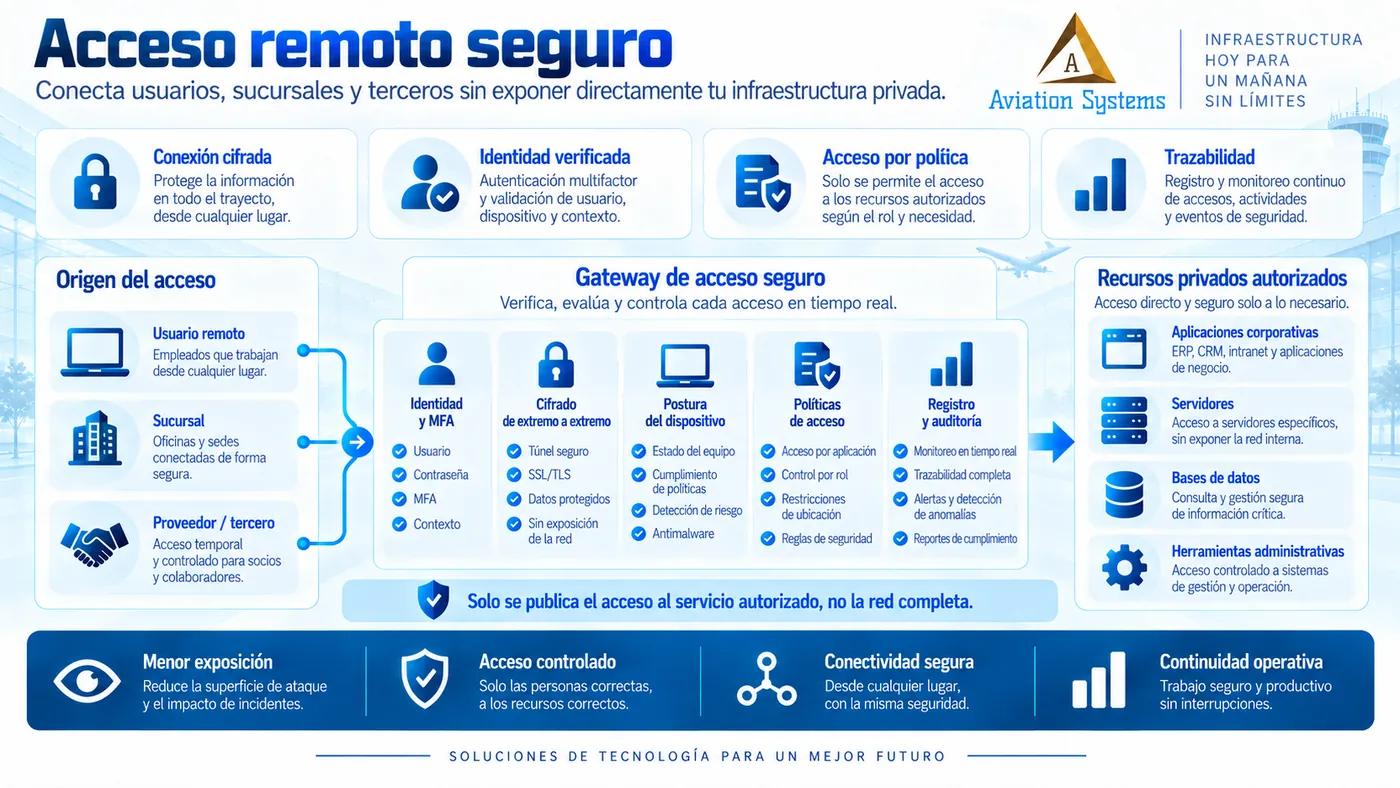
We design remote access according to the resource each user or device really needs. We integrate VPN, ZTNA, MFA and identity to avoid exposing administrative services directly to the Internet and to limit the reach of each session.

Quote this service
Business VPN for encrypted remote access
Business VPNWe implement encrypted tunnels for staff, administrators, sites or remote equipment with routes and permissions matching the intended use.See what it includes →
Zero Trust Network Access for private applications
ZTNAWhen the case justifies it, we propose per-application or per-resource access instead of granting general connectivity to the whole private network.See what it includes →
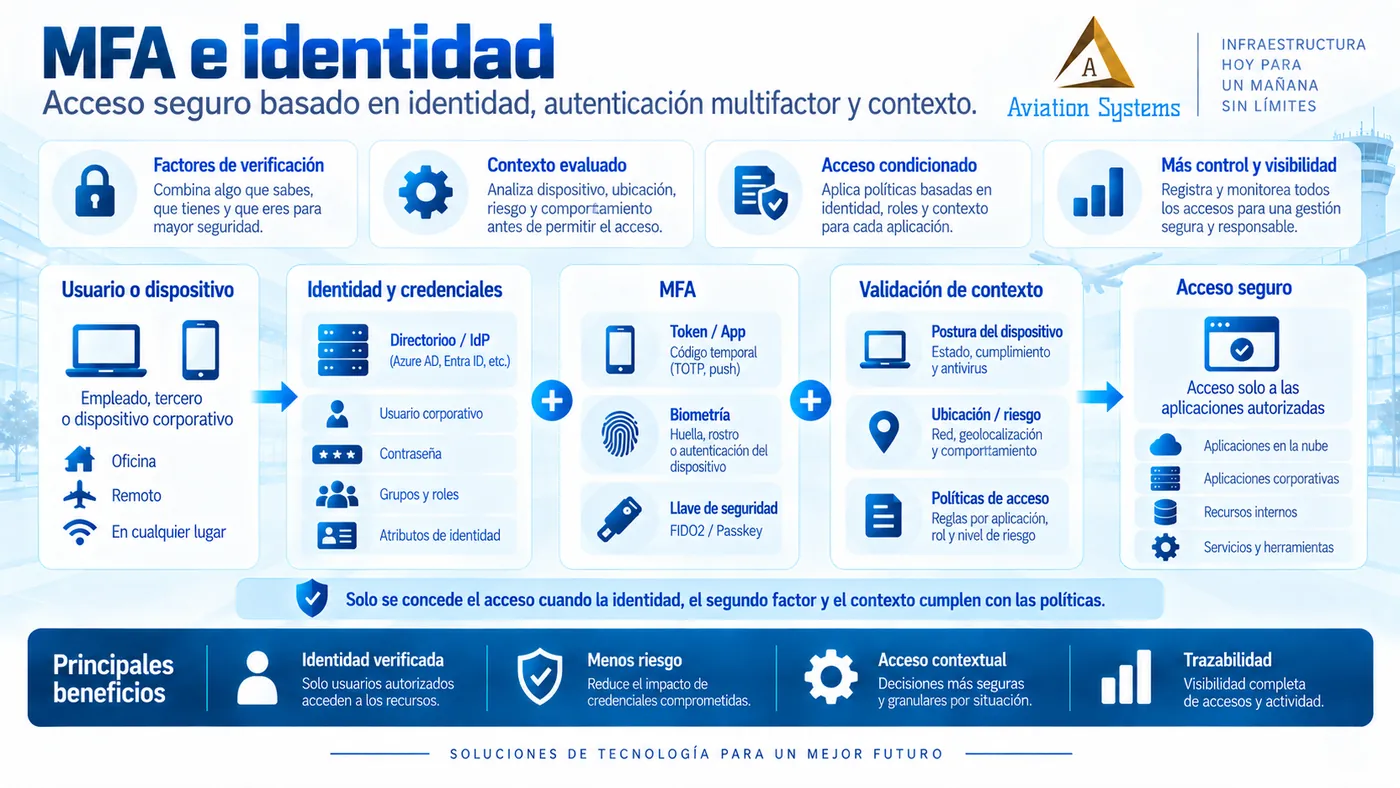
MFA and identity for secure access
MFA and identityWe integrate multi-factor authentication and centralized identity to strengthen administrative, remote and critical-application access.See what it includes →
Secure remote access for infrastructure administration
Managed remote accessWe design administration paths through VPN, bastion hosts, jump hosts or other controls to avoid directly exposed interfaces.See what it includes →
Service 07

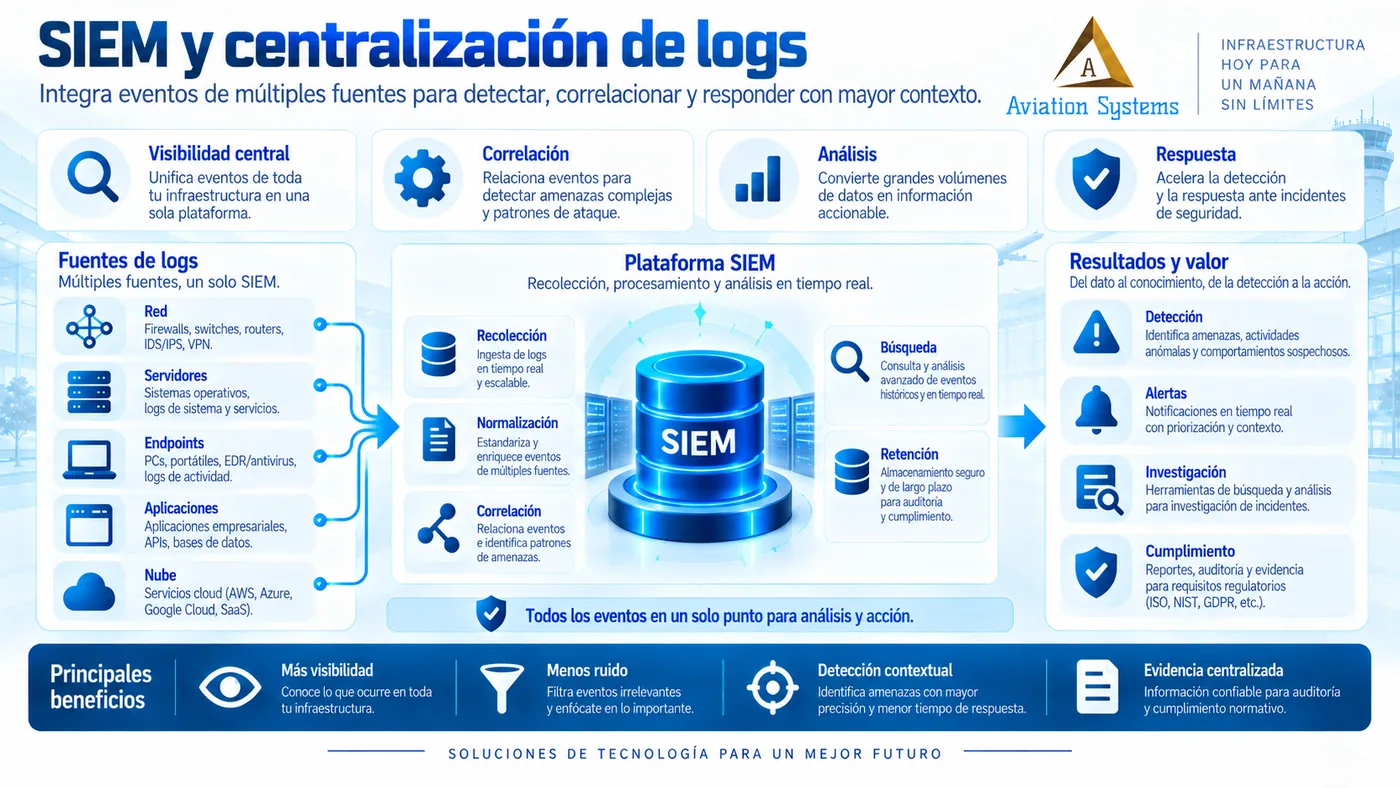
SIEM and log centralization

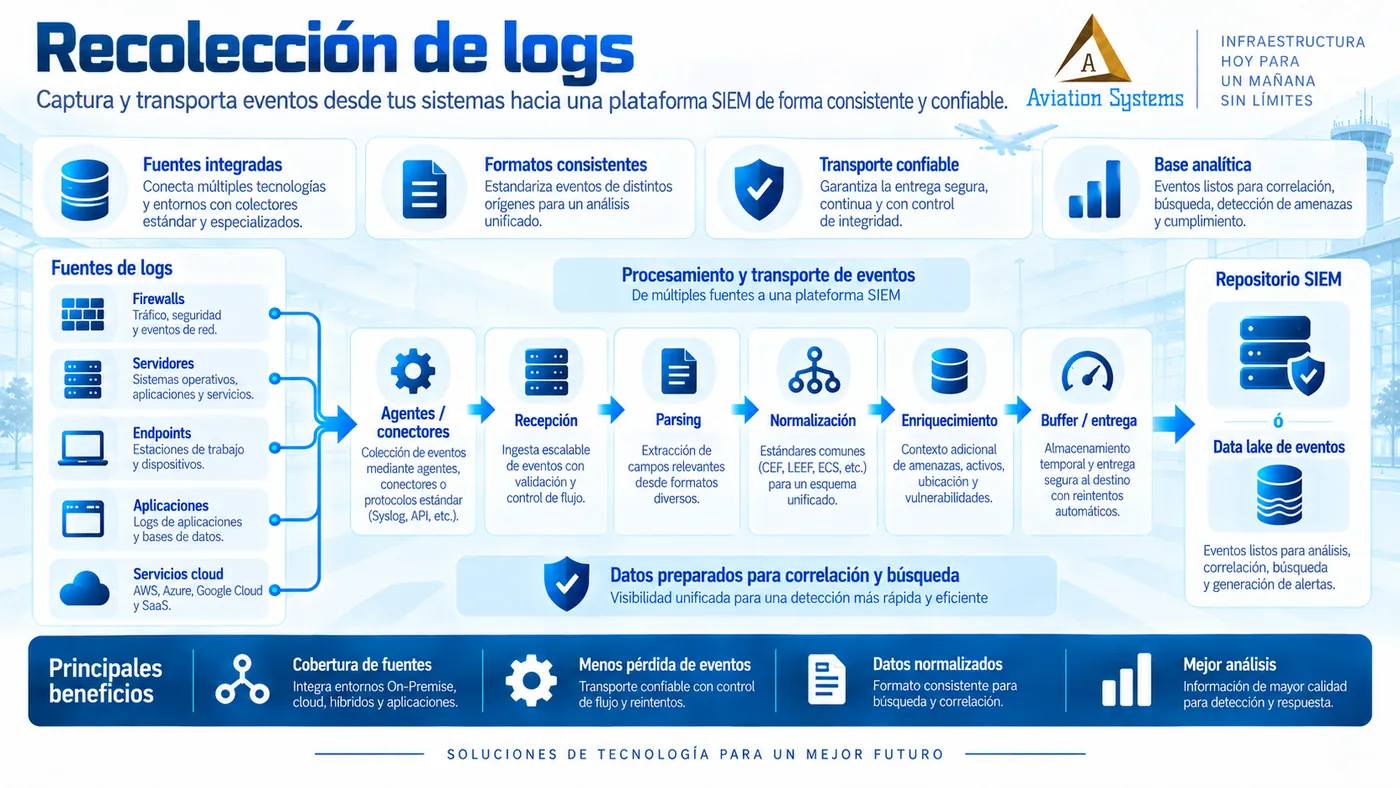
We centralize logs from infrastructure, systems, applications and security controls to improve visibility. The choice of sources, retention, normalization and use cases is defined according to the assets and risks that really need to be monitored.

Quote this service
Centralized security log collection
Log collectionWe integrate sources such as servers, firewalls, endpoints, applications and network equipment within the defined scope.See what it includes →
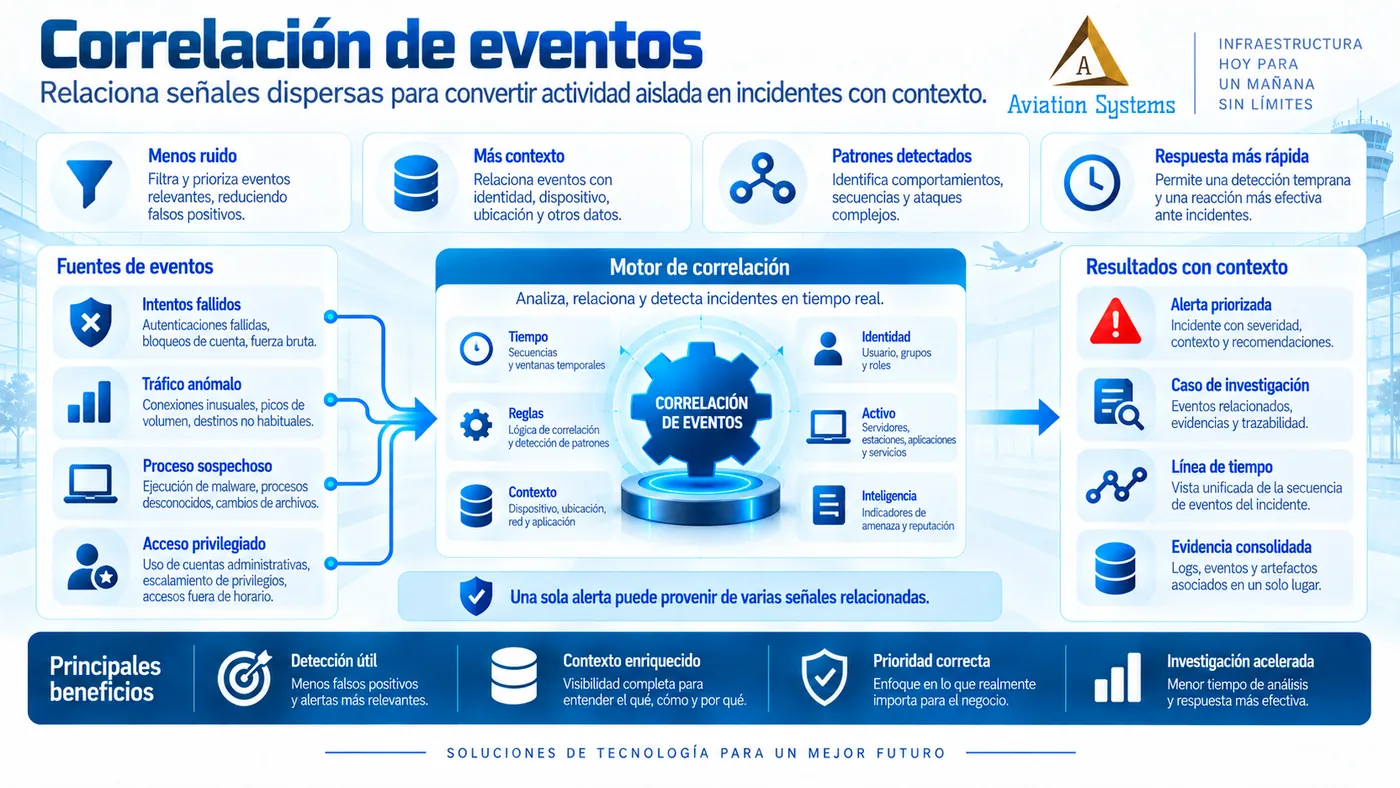
Event correlation in a SIEM platform
Event correlationWe correlate events across multiple sources to detect sequences or behaviors that a single log would not reveal.See what it includes →
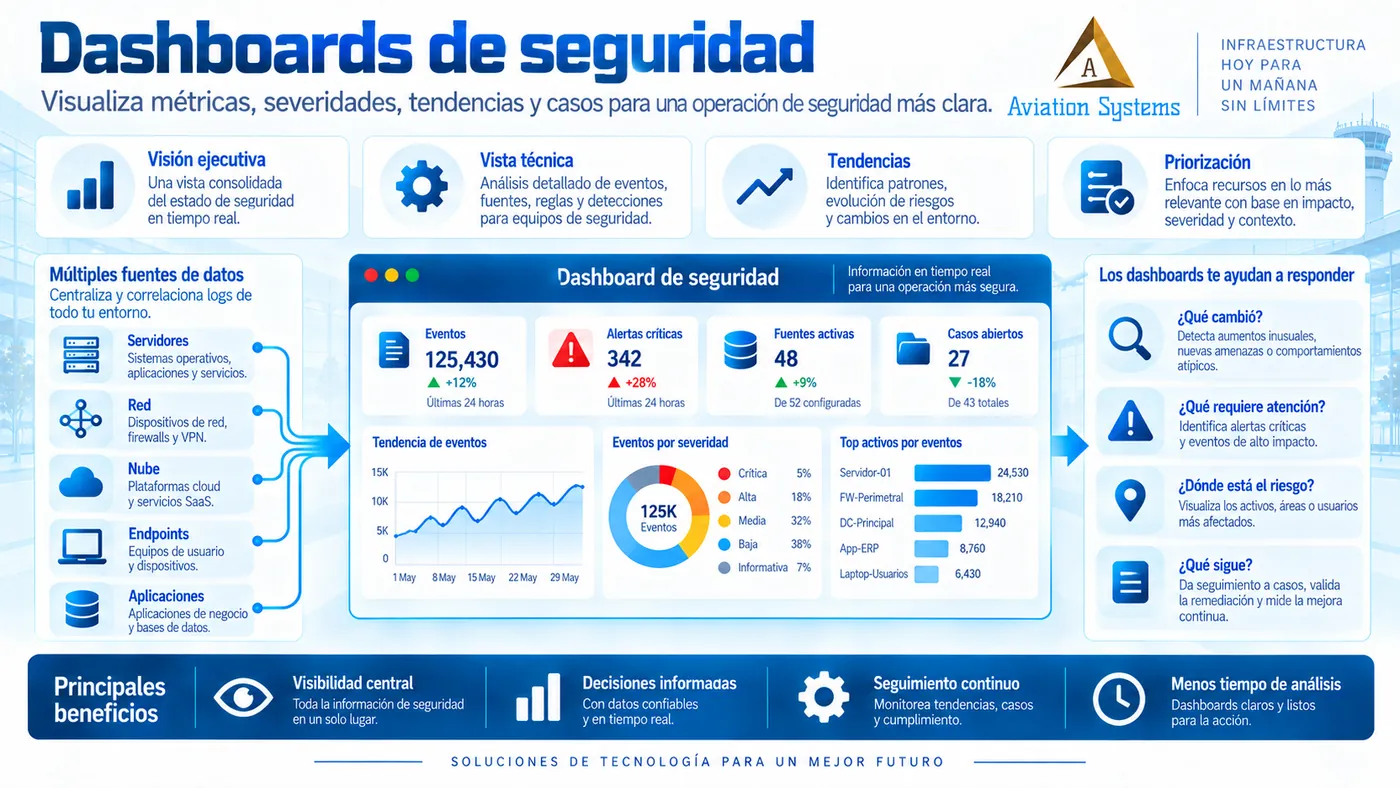
Security dashboards for event monitoring
Security dashboardsWe build views to observe events, trends, sources and conditions relevant to operations and analysis.See what it includes →
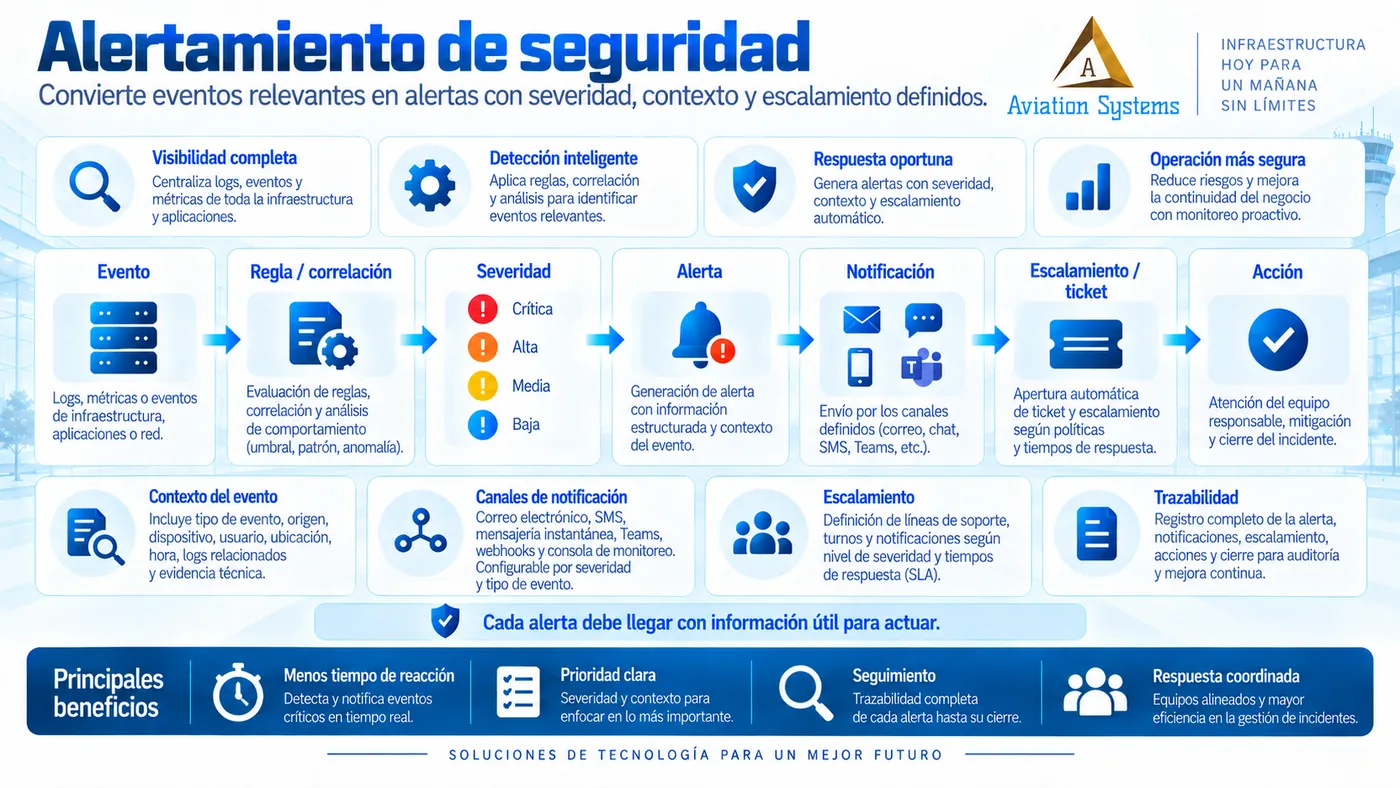
Security alerting based on correlated events
AlertingWe define actionable alerts with severity, context and escalation criteria to reduce useless notifications.See what it includes →
Service 08

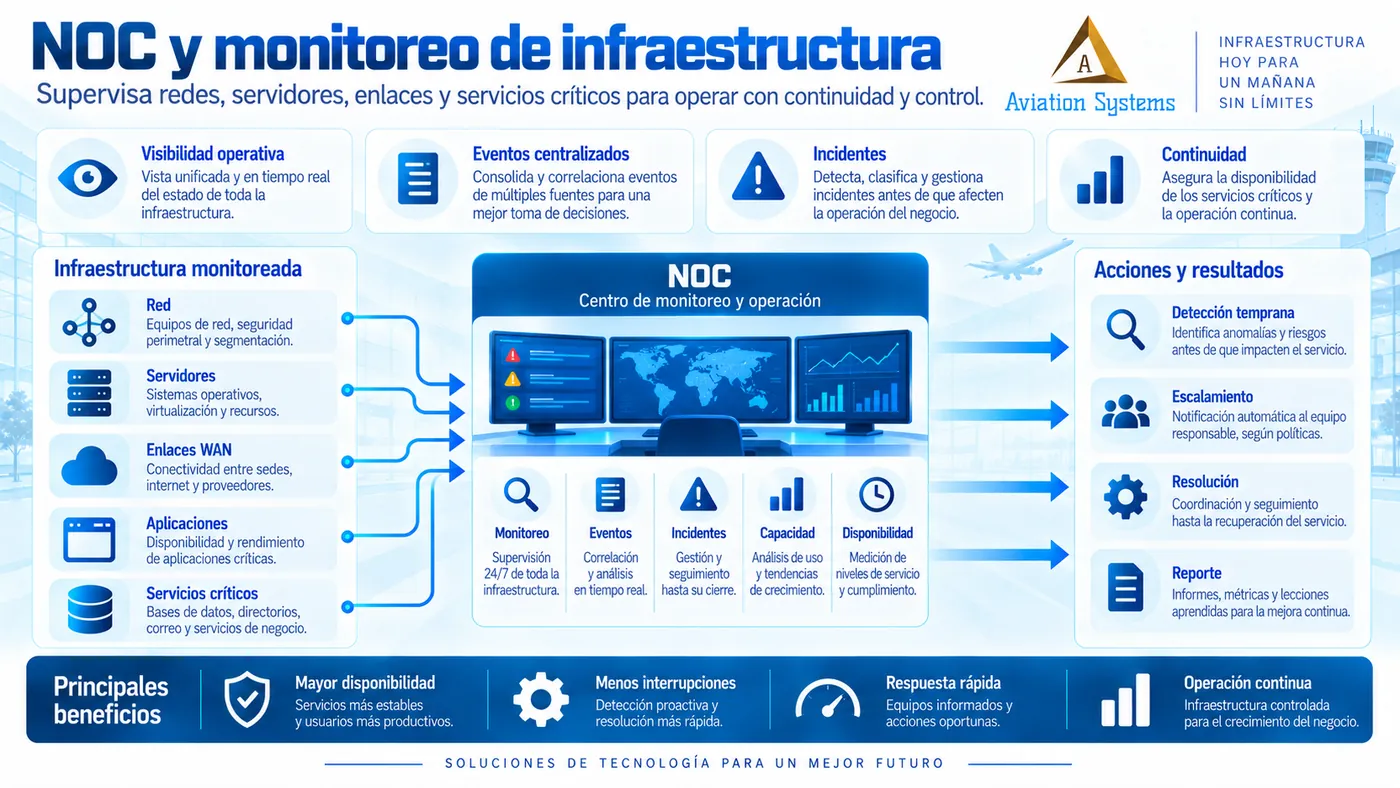
NOC and infrastructure monitoring

We design NOC capabilities to observe infrastructure availability, capacity and performance. We centralize network, server and service metrics and alerts to detect degradation before it becomes a major outage.

Quote this service
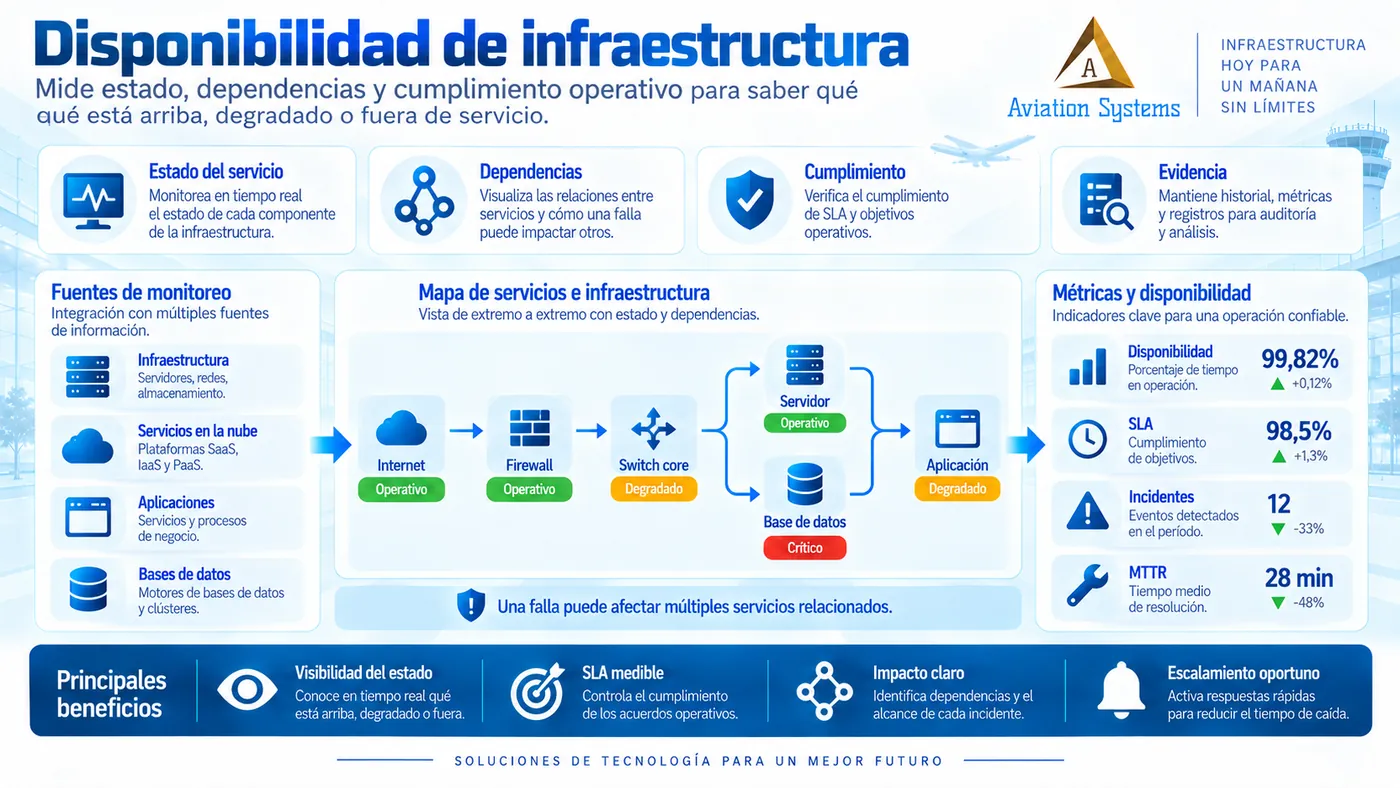
NOC monitoring of infrastructure availability
AvailabilityWe monitor the status of equipment, links and services to identify outages and loss of connectivity within the contracted scope.See what it includes →
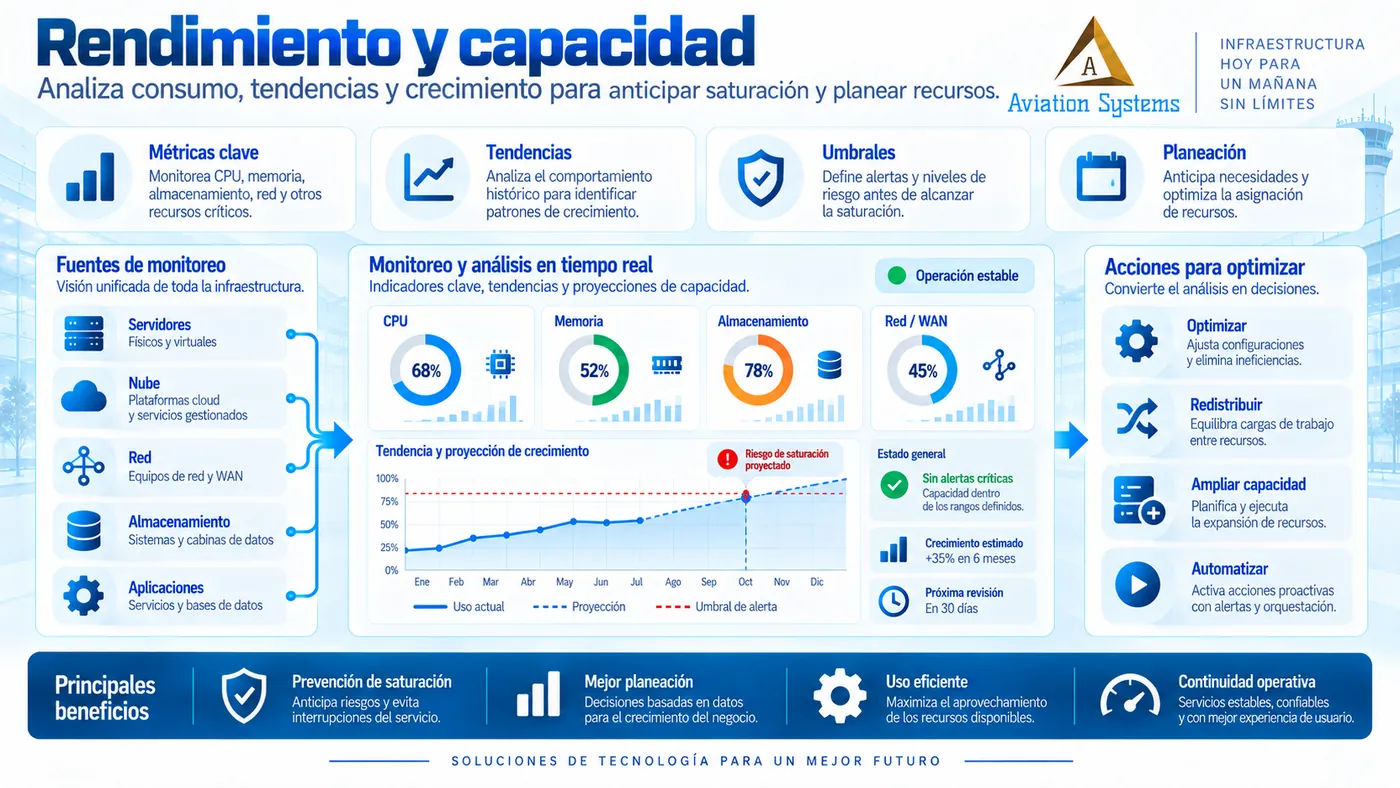
Infrastructure performance and capacity monitoring
Performance and capacityWe track link utilization, CPU, memory, storage and other relevant metrics to anticipate saturation or degradation.See what it includes →
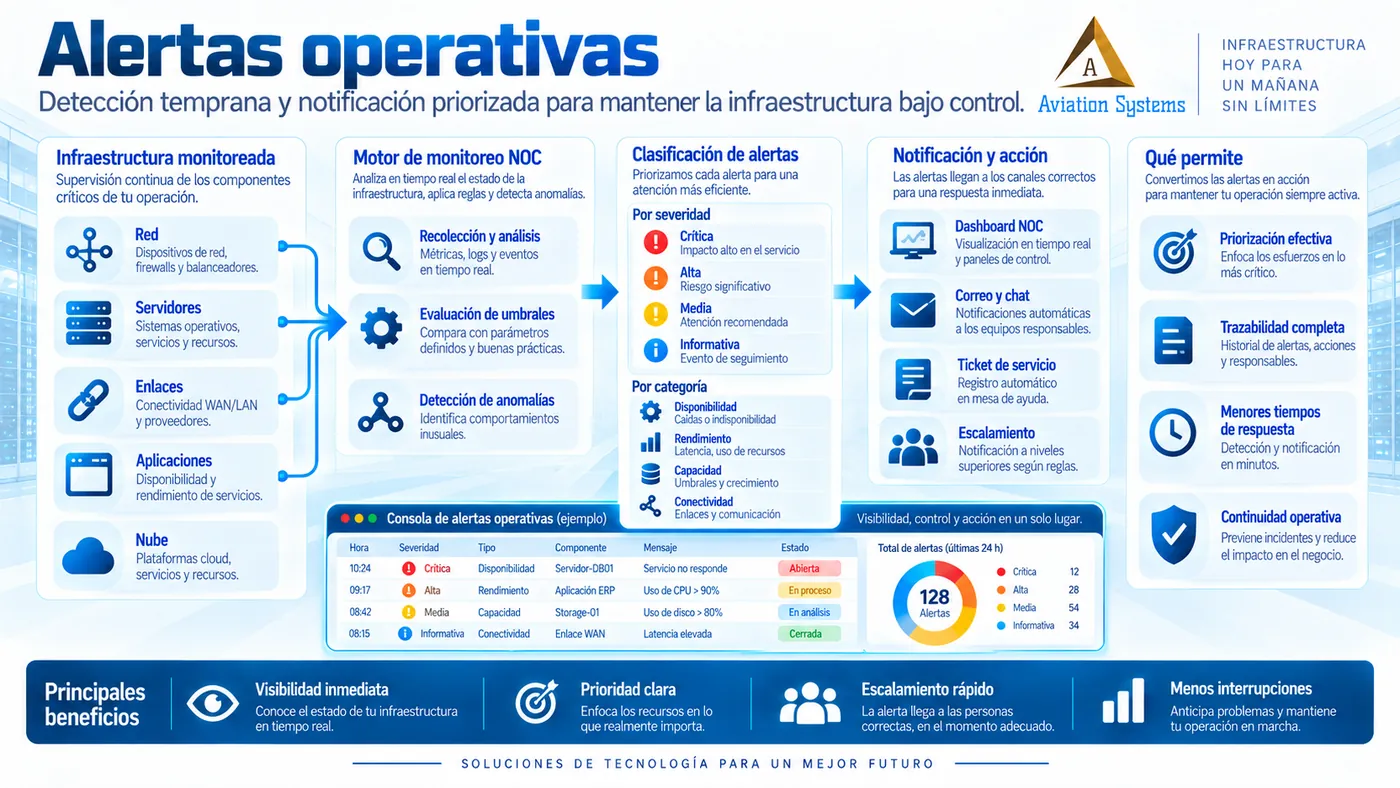
Operational alerts for NOC and IT infrastructure
Operational alertsWe configure alerts for conditions that require technical attention and reduce repetitive or low-impact notifications.See what it includes →
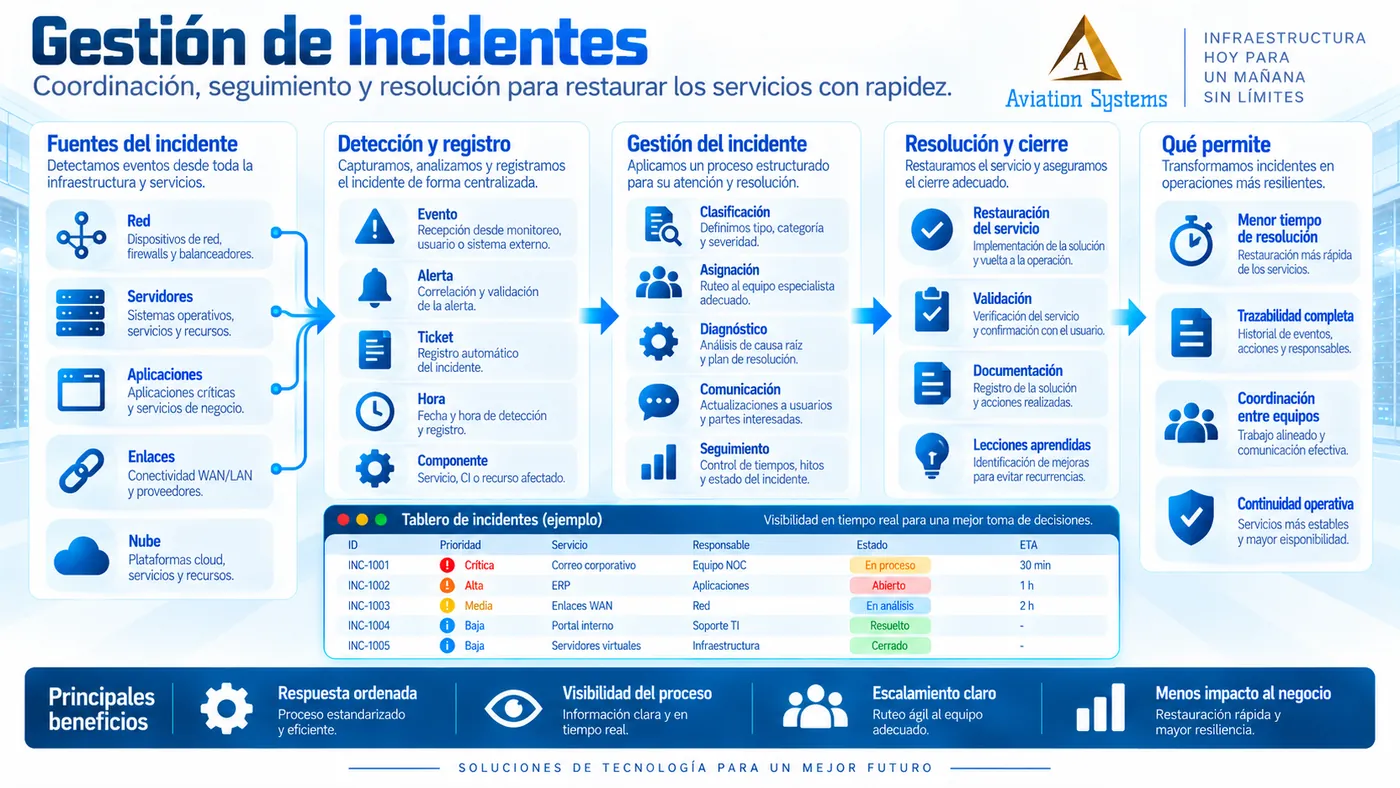
Infrastructure incident management from the NOC
Incident managementWe organize the logging, escalation and follow-up of failures to keep traceability from detection to closure.See what it includes →
Service 09

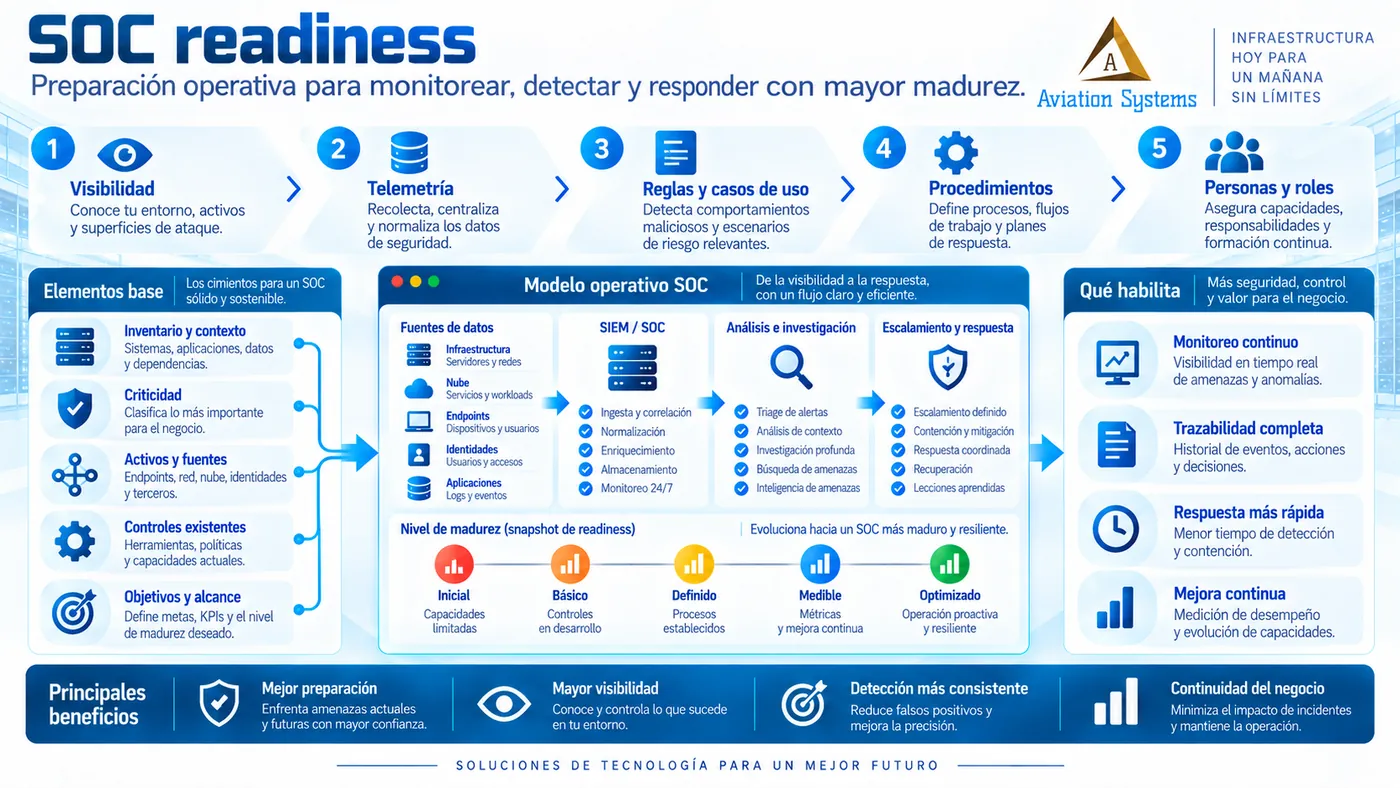
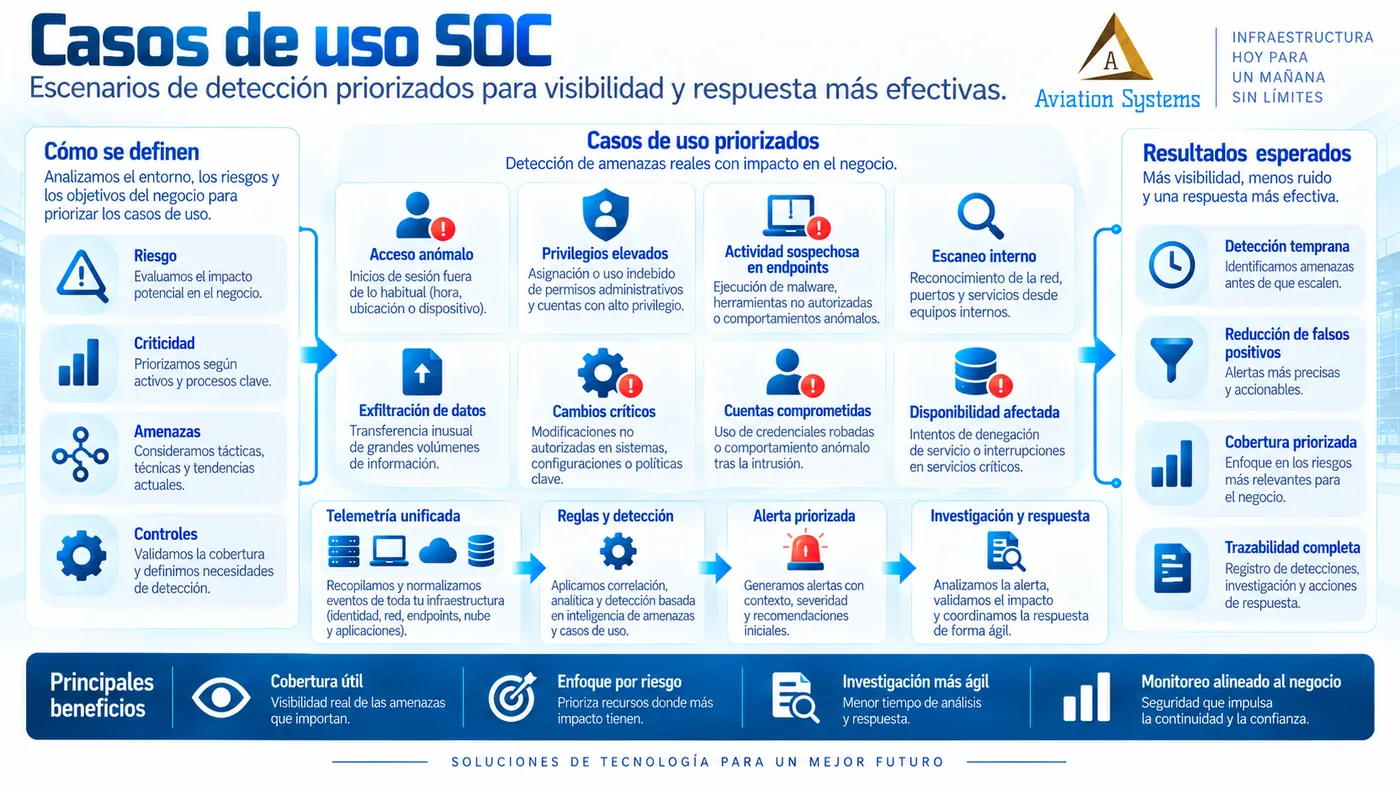
SOC readiness and security monitoring

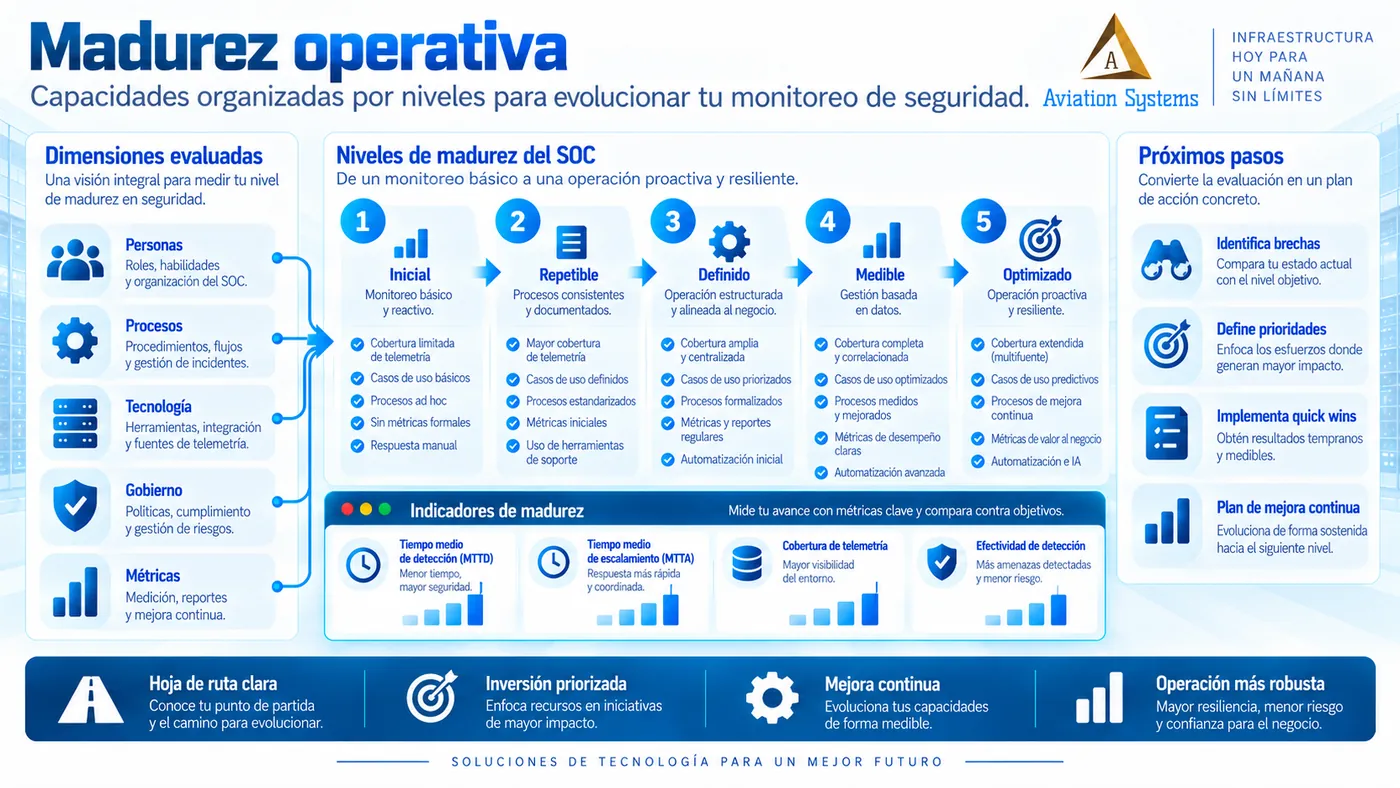
We prepare the organization to run or integrate with SOC capabilities. We define telemetry sources, use cases, procedures, severities and escalation. SOC readiness does not by itself mean a 24/7 managed SOC; coverage is defined according to the contracted service.

Quote this service
Use cases for SOC security monitoring
Use casesWe define which behaviors or events should trigger an investigation based on assets, threats and available controls.See what it includes →
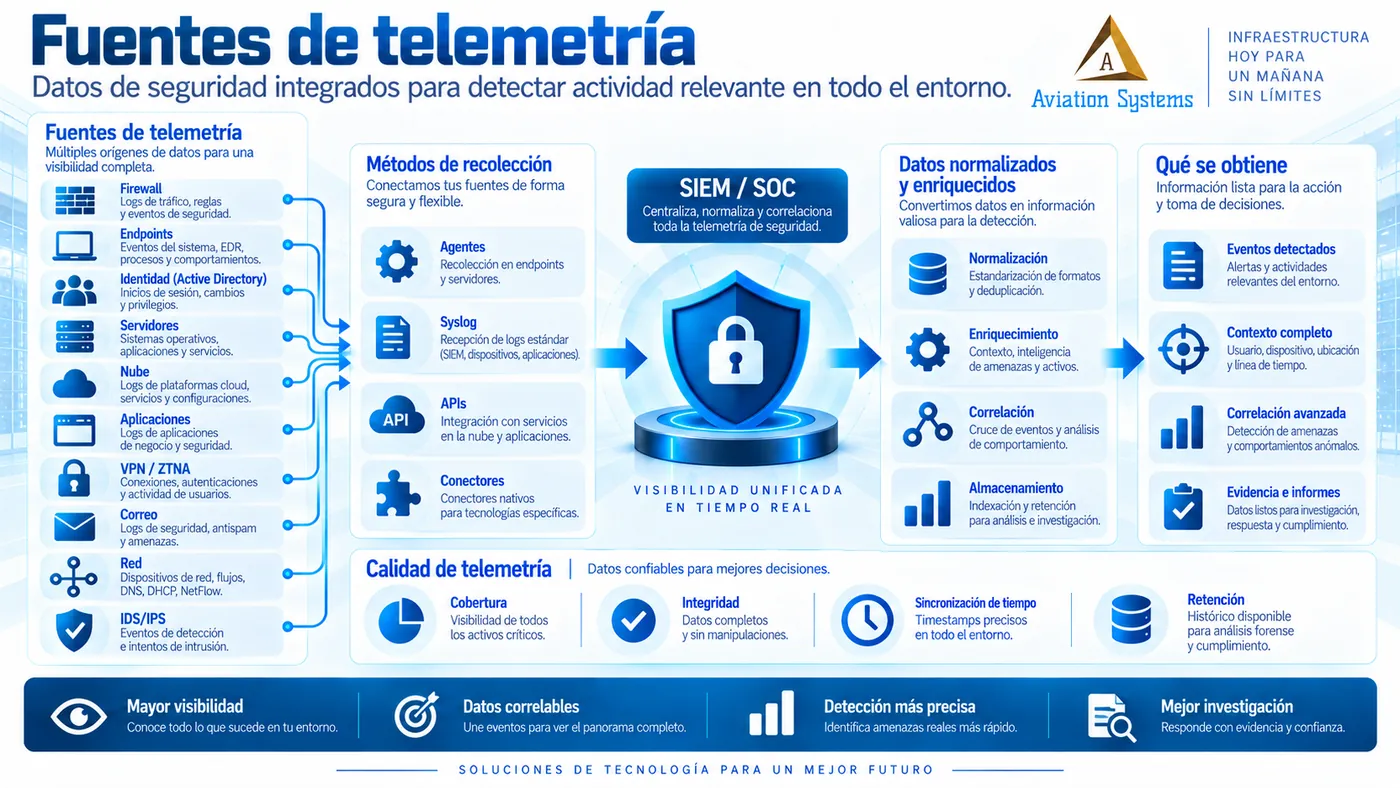
Telemetry sources for SOC and security monitoring
Telemetry sourcesWe identify the logs, events and signals needed from identity, endpoints, network, servers, cloud and applications.See what it includes →
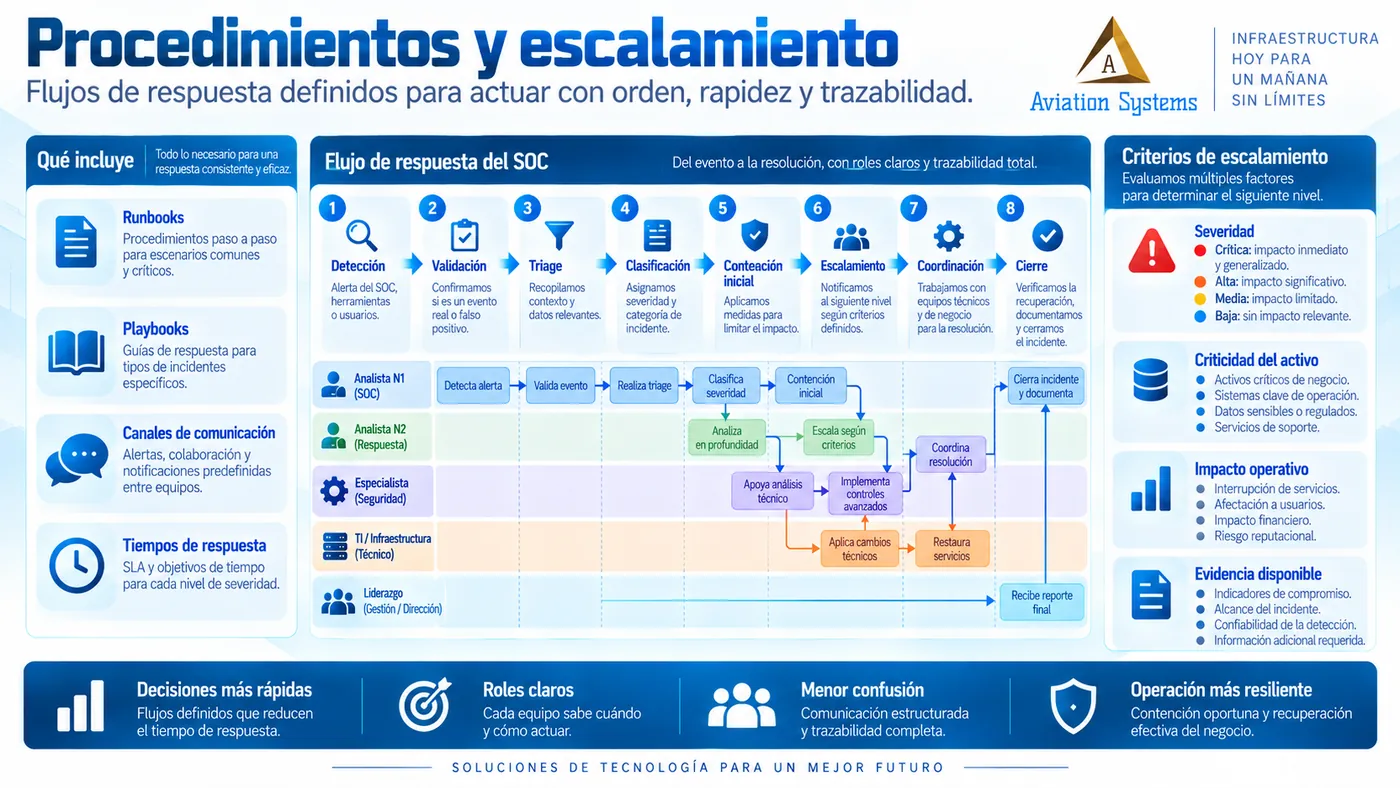
Escalation procedures for SOC monitoring
Procedures and escalationWe document what to do when relevant alerts occur, who must step in and when to escalate to technical or business owners.See what it includes →
Operational maturity assessment for SOC
Operational maturityWe review processes, tools, staff and coverage to set a realistic path toward a more mature security operation.See what it includes →
Service 10

Incident response

We establish procedures to respond to security incidents in an orderly way. We prioritize preserving evidence, limiting impact, recovering services and documenting decisions without improvising during a critical situation.

Quote this service
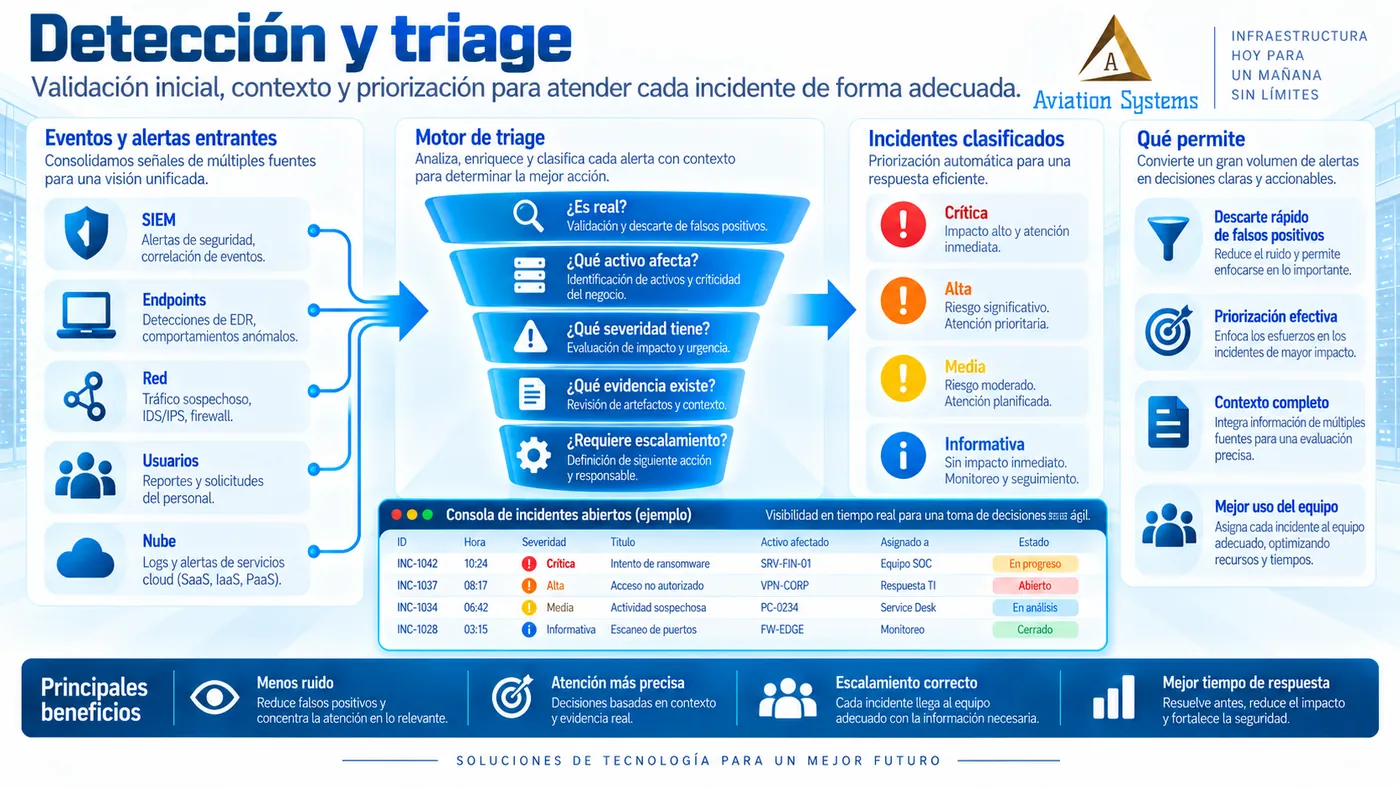
Initial detection and triage of cybersecurity incidents
Detection and triageWe classify signals and events to determine whether there is an incident, its possible scope and the response priority.See what it includes →
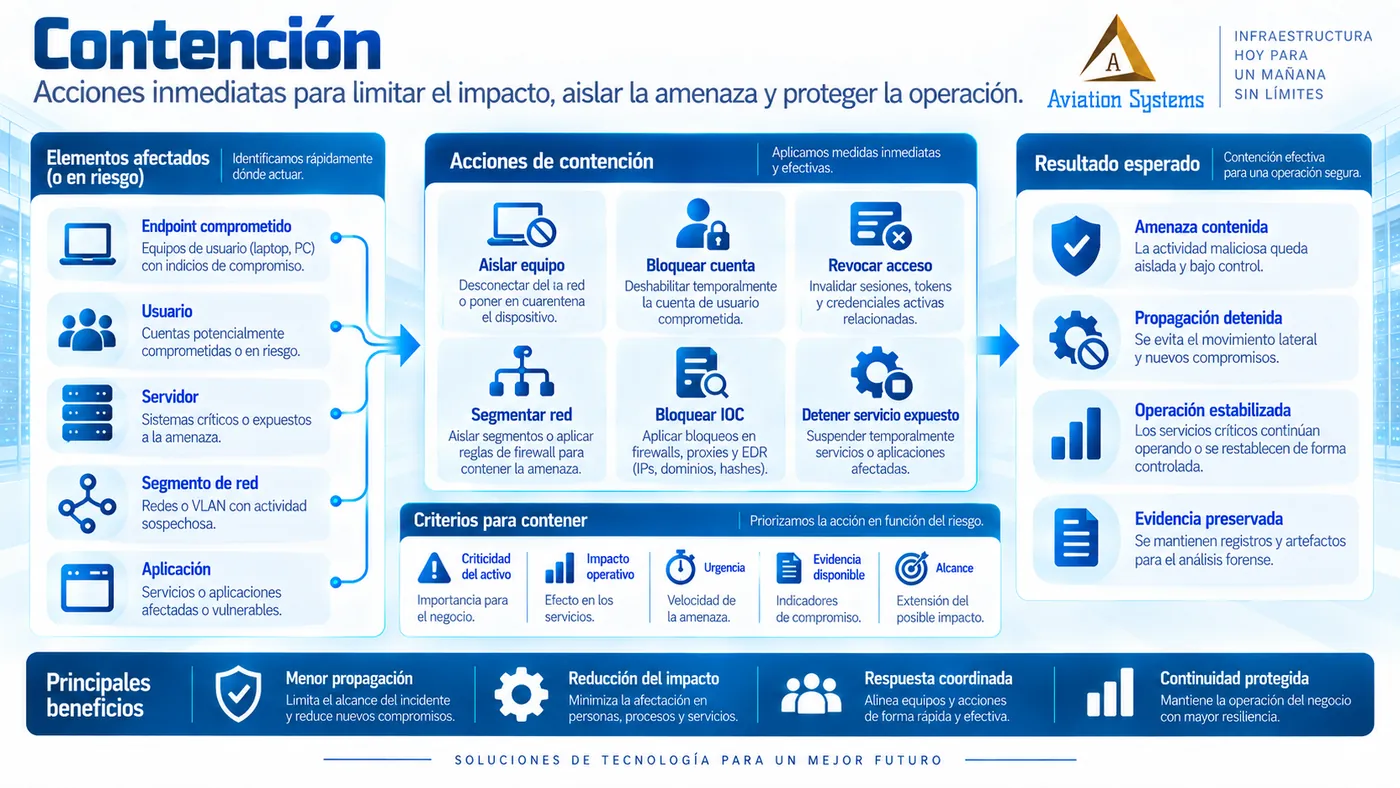
Containment of cybersecurity incidents
ContainmentWe apply controlled measures to limit spread or damage without destroying the evidence needed to understand what happened.See what it includes →
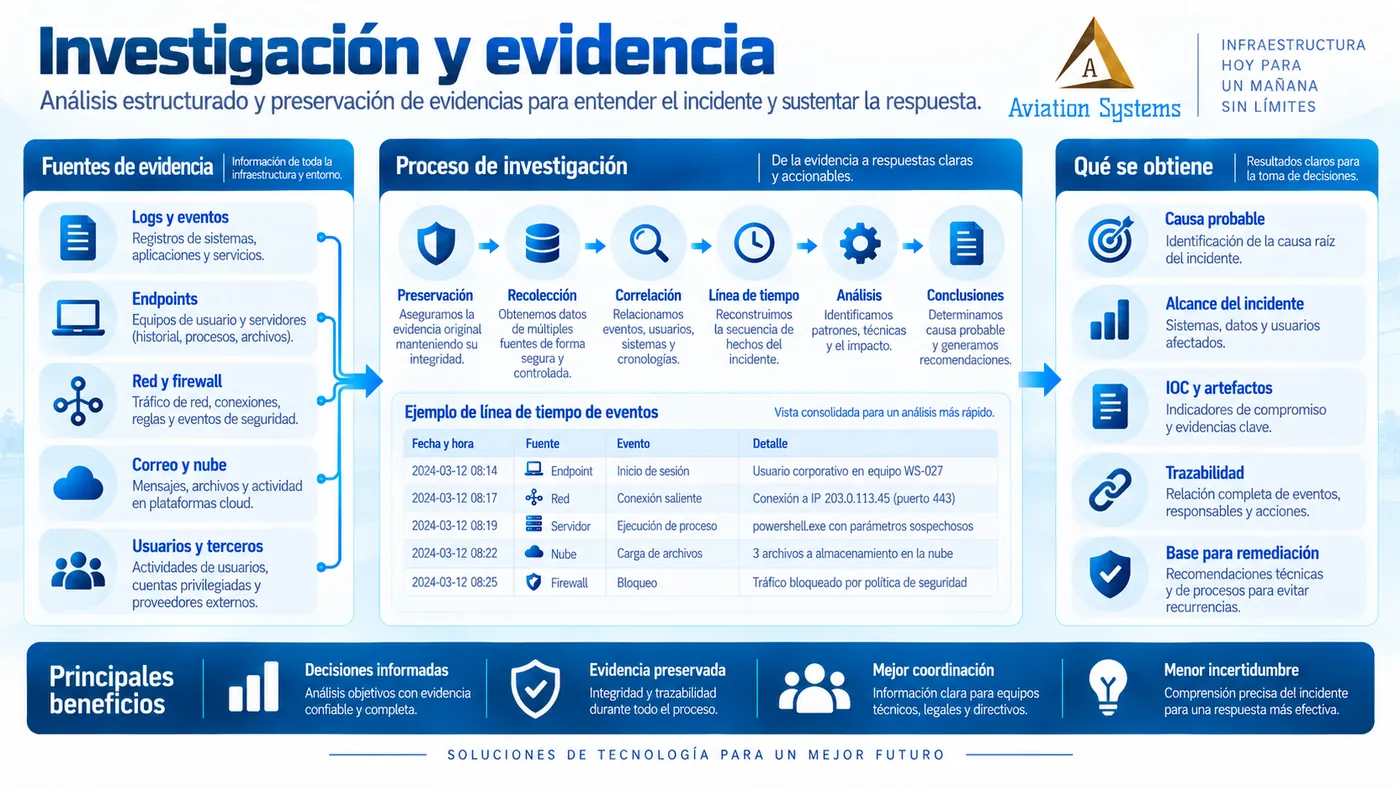
Technical investigation and preservation of incident evidence
Investigation and evidenceWe collect available logs and evidence to reconstruct the sequence of the incident within the contracted technical scope.See what it includes →
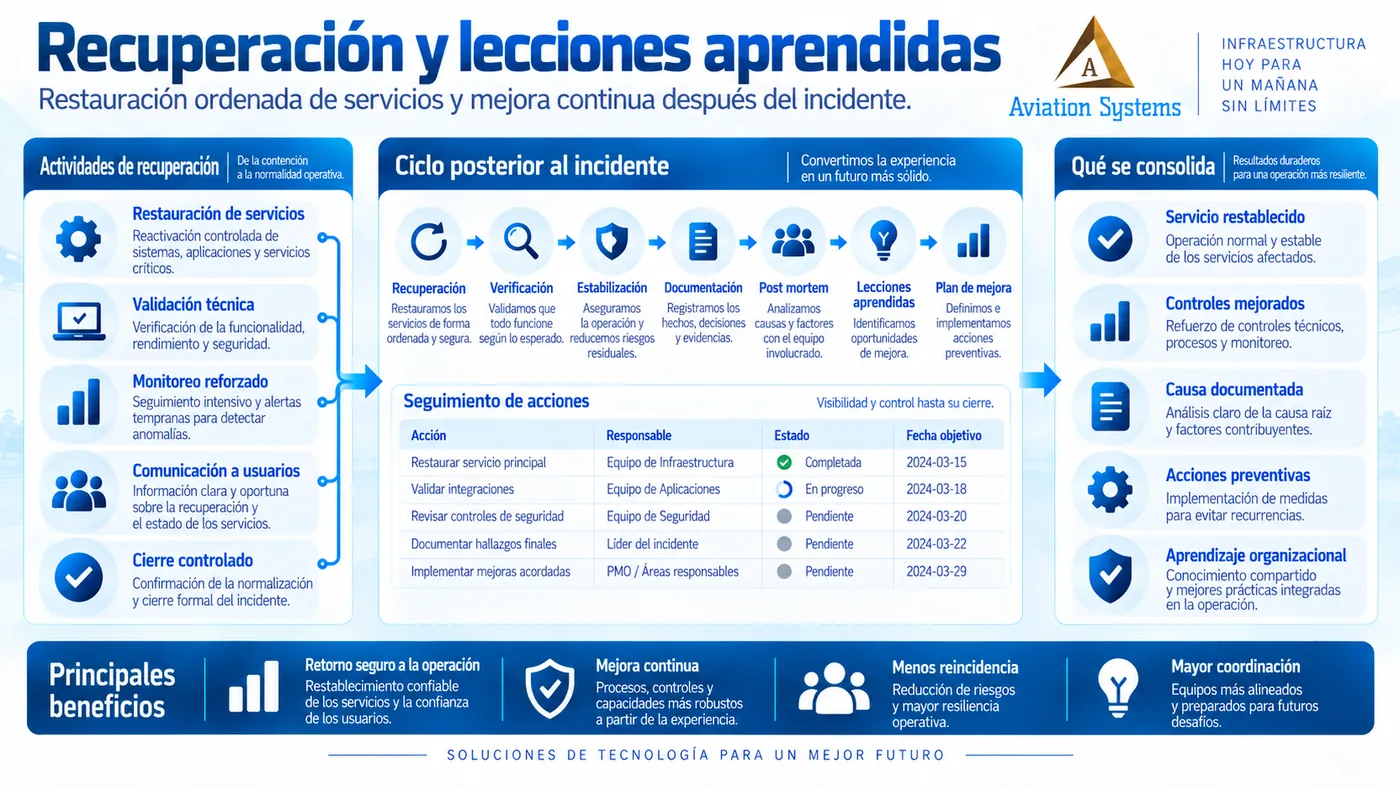
Recovery and lessons learned after an incident
Recovery and lessons learnedWe restore services in a controlled way and use the lessons learned to reinforce configurations, procedures and monitoring.See what it includes →
Service 11

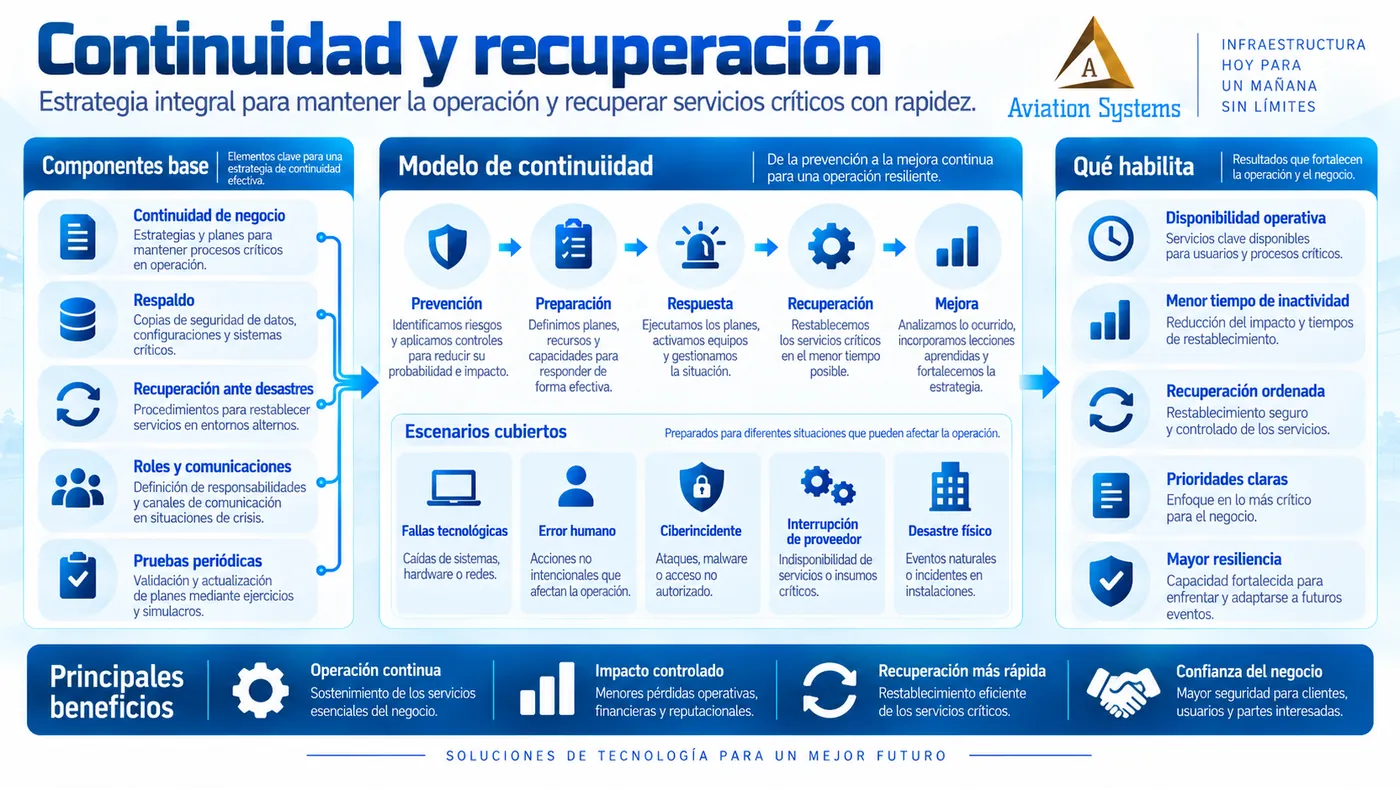
Continuity and recovery

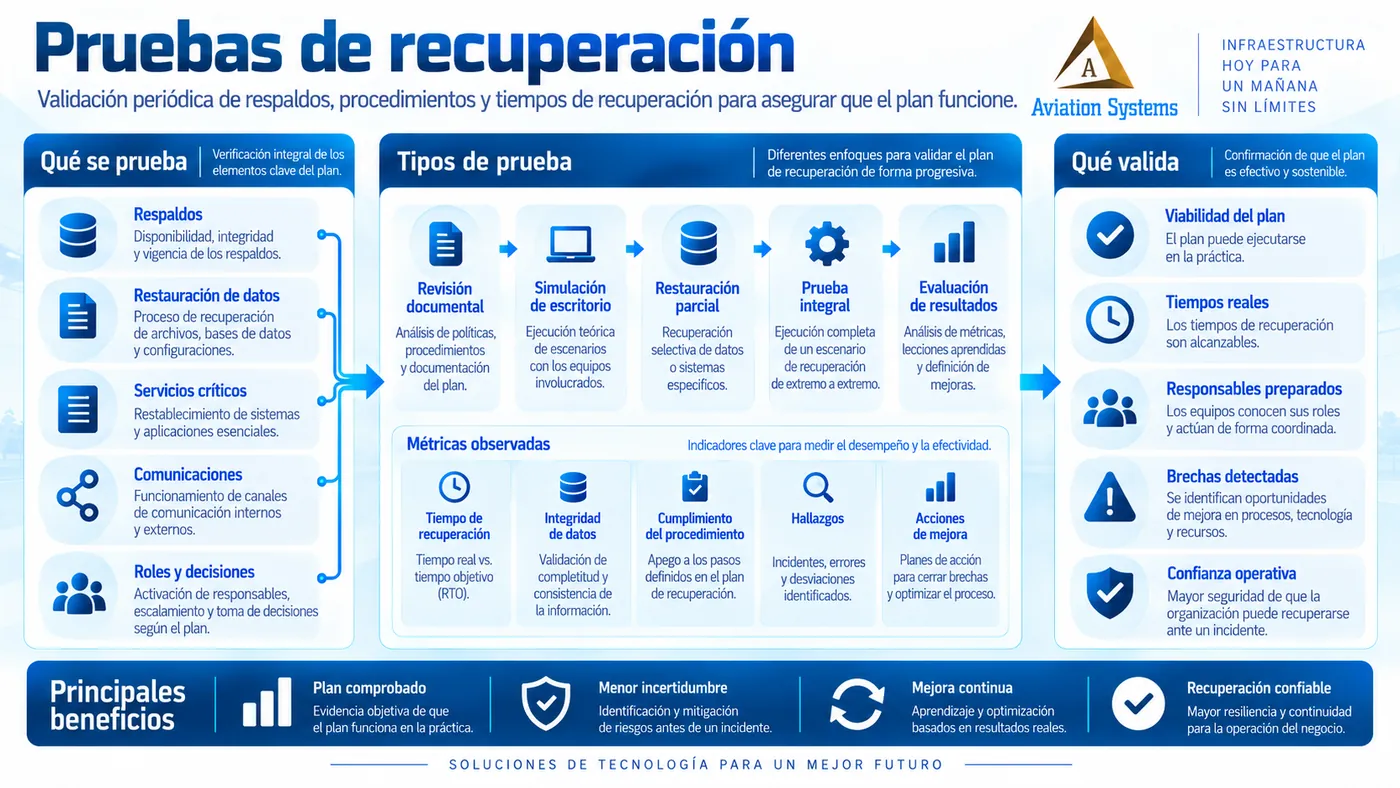
We integrate security and continuity so an organization does not rely only on preventing incidents. We define recovery priorities, backups, procedures and tests according to the criticality of each service.

Quote this service
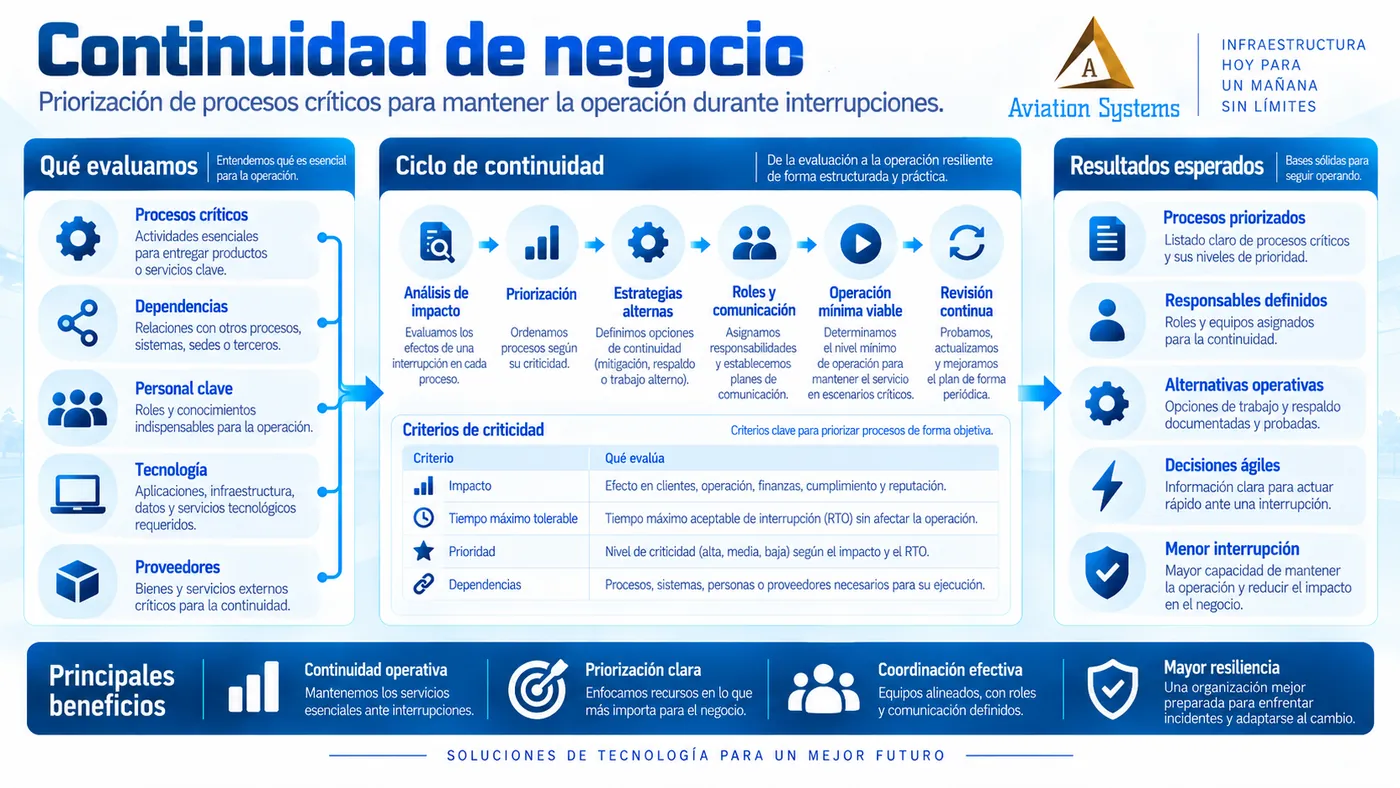
Business continuity for technology services
Business continuityWe identify priority services, dependencies and technical strategies to maintain or restore operations during failures or incidents.See what it includes →
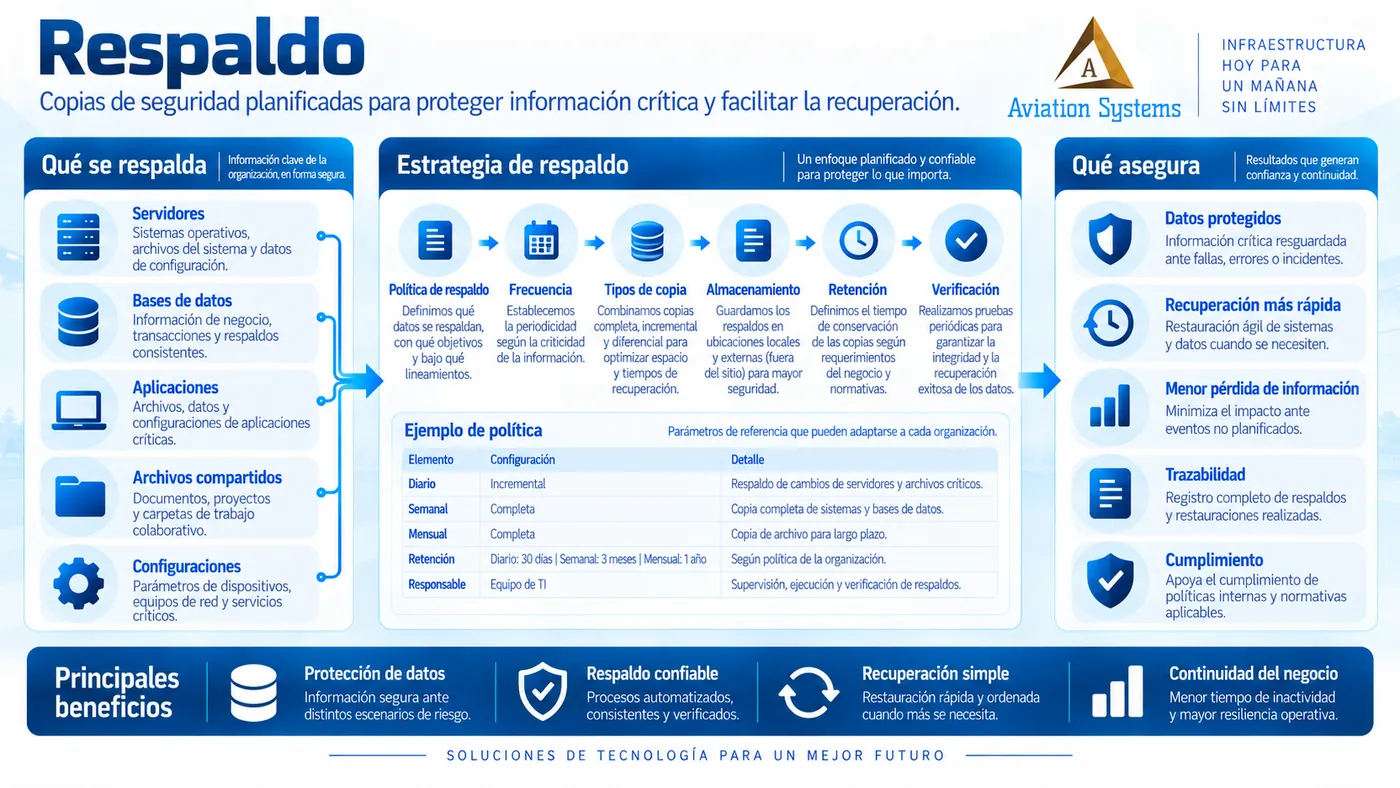
Secure backup for continuity and recovery
BackupWe design backup strategies considering separate copies, retention, protection against deletion and real restore capability.See what it includes →
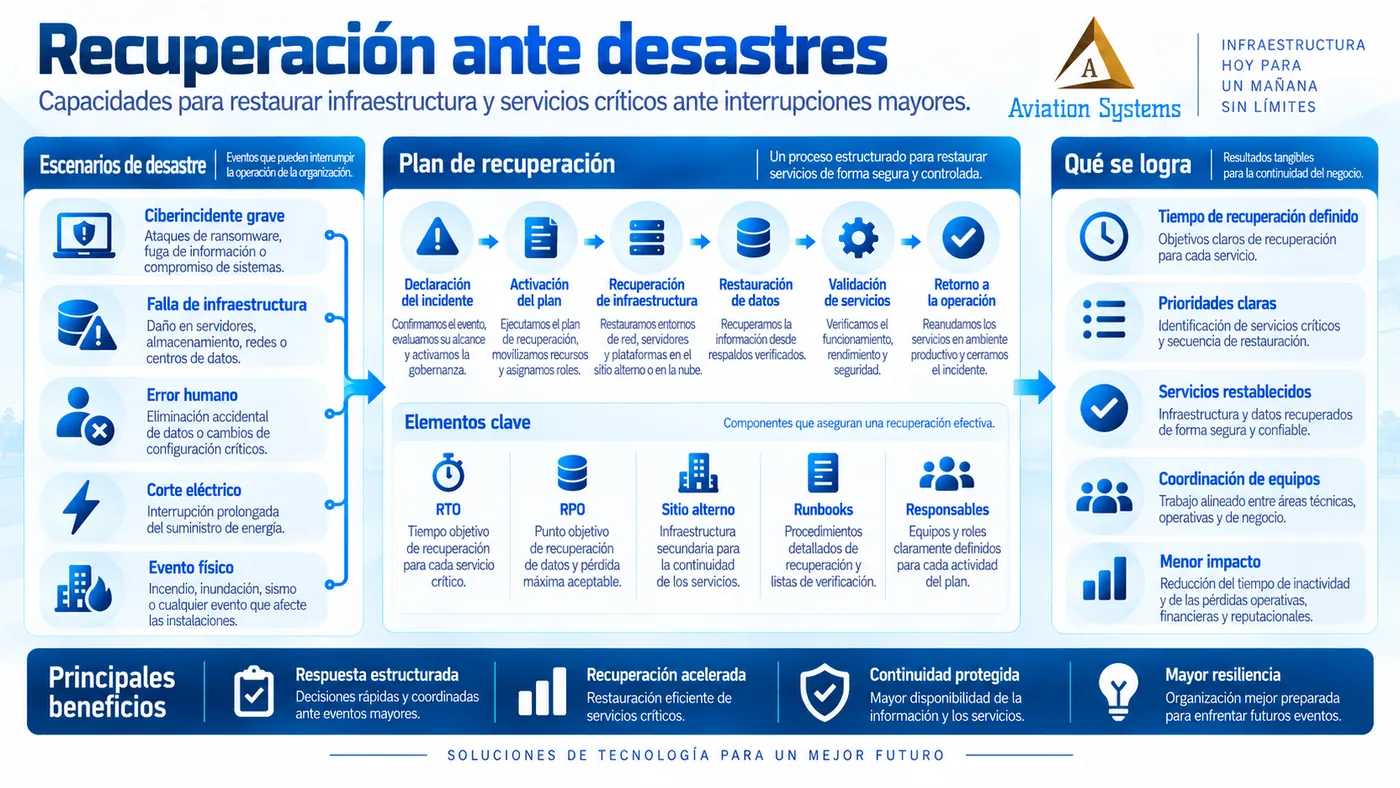
Disaster recovery for technology infrastructure
Disaster RecoveryWe design recovery procedures and architecture to restore services after major failures, loss of infrastructure or incidents.See what it includes →
Restore and disaster recovery testing
Recovery testingWe verify that backups and procedures work before they are needed in a real emergency.See what it includes →

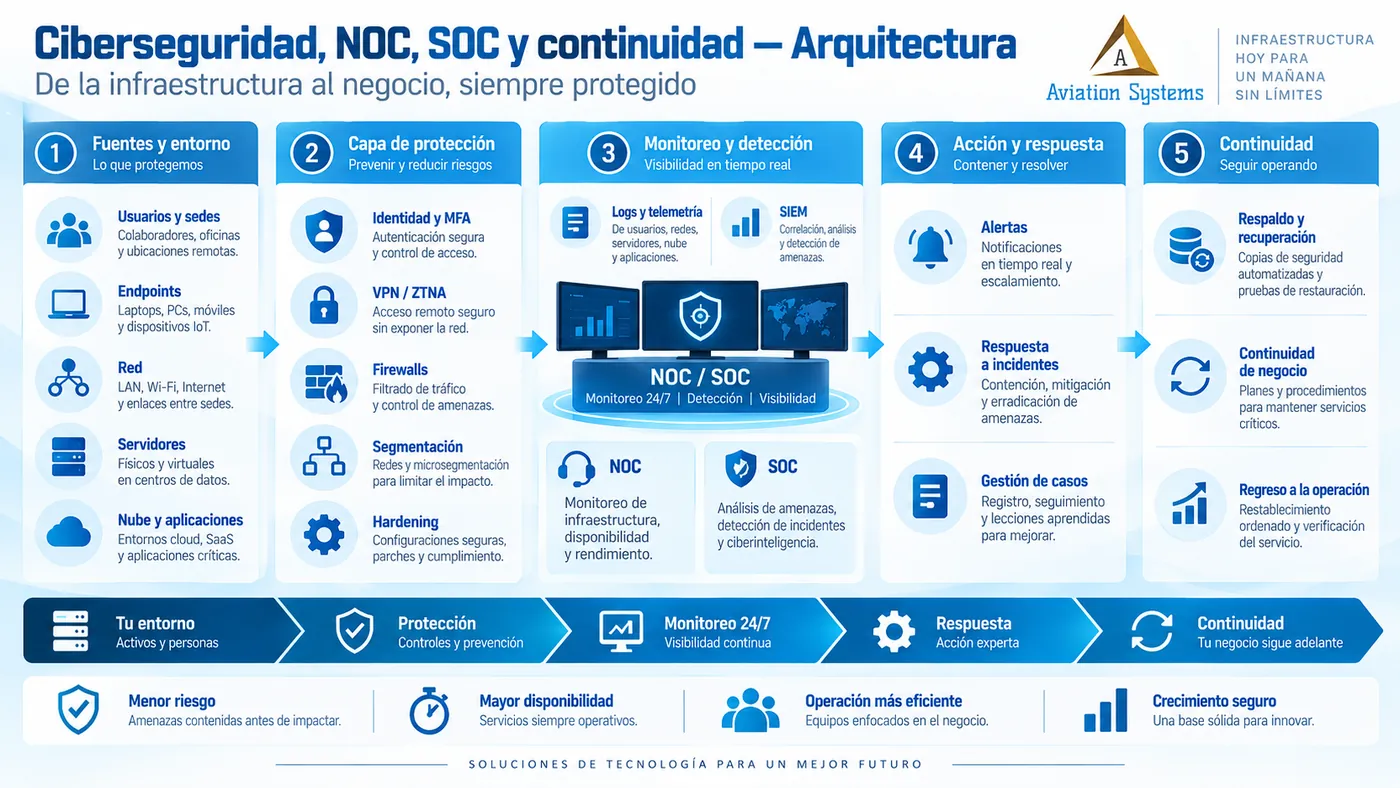
Prevent, detect, respond and recover

Prevent

Hardening, segmentation, least privilege, network controls, MFA and secure access to reduce the attack surface.

Detect

Logs, SIEM, telemetry, dashboards and alerts to identify relevant behaviors and degradation.

Respond

Triage, containment, procedures, escalation and evidence to act in an orderly way during incidents.

Recover

Backups, continuity, disaster recovery and testing to restore priority services after a failure.

From the initial assessment to continuous improvement

01Context and assets

We identify services, users, infrastructure, exposure, dependencies and priority assets.

02Risk and scope

We define what to review or protect first, with clear authorization, windows and operational constraints.

03Architecture and controls

We design layers of protection, access, monitoring and recovery suited to the environment and the risk.

04Implementation

We apply configurations, integrations and controls in a controlled way, documenting changes and exceptions.

05Validation

We verify operation, monitoring coverage and remediations through tests suited to the scope.

06Operation and improvement

We maintain documentation, alerts, procedures and periodic reviews according to the contracted service.

Cybersecurity architecture with identity, network, SIEM, NOC, SOC and continuity

Controls selected according to risk and architecture

Not every organization needs the same tools. We select controls and platforms according to exposure, criticality, compatibility, operational capacity and compliance requirements.

NIST Cybersecurity FrameworkCIS BenchmarksISO/IEC 27001OWASPCVSS / CWEFirewalls / IDS / IPSVPN / IPsec / WireGuardZTNA / MFA / IdPSIEM / SyslogEDR / XDR depending on the platformSNMP / infrastructure monitoringBackup / Disaster Recovery

Before starting a cybersecurity project

What does an initial cybersecurity assessment include?

The scope is defined before starting. It can include assets, exposed services, configurations, access, vulnerabilities, segmentation, logging, backup and existing controls, followed by a prioritized report.

Do you run tests without affecting operations?

Activities are planned with a defined scope, windows and authorizations. When a test may create load, changes or operational risk, it is agreed in advance and the appropriate method is selected.

Can you implement VPN, MFA and secure access without publishing servers on the Internet?

Yes. We can design access through VPN, ZTNA, MFA, bastion hosts or other controls to reduce the direct exposure of administrative interfaces and services.

Are a NOC and a SOC the same thing?

No. A NOC focuses mainly on infrastructure availability, capacity and operation; a SOC focuses on security events, threats and incidents. They can share tools and telemetry, but they serve different functions.

Does SOC readiness mean that Aviation Systems runs a 24/7 SOC?

Not necessarily. SOC readiness prepares telemetry, use cases, processes and escalation. Coverage hours, responsibilities and managed operation are defined only when they are explicitly part of the contracted service.

Do you also implement backup and disaster recovery?

Yes. We can integrate backup, recovery priorities, disaster recovery procedures and restore testing according to criticality and the available infrastructure.
Let's start by identifying what needs protection

Share your infrastructure, number of sites, critical services, remote access, current problems and security goals. With that context we can define an initial assessment and prioritize the highest-impact actions.
Request a security assessment
Business cybersecurity, NOC, SOC and continuity
Equipment for this service: Firewalls and perimeter security · Switches and enterprise Wi-Fi · Servers and NAS · UPS units
Looking for equipment or a solution for your business? I can help.